

communication skills improv

Need help with active listening? Try this improv exercise…

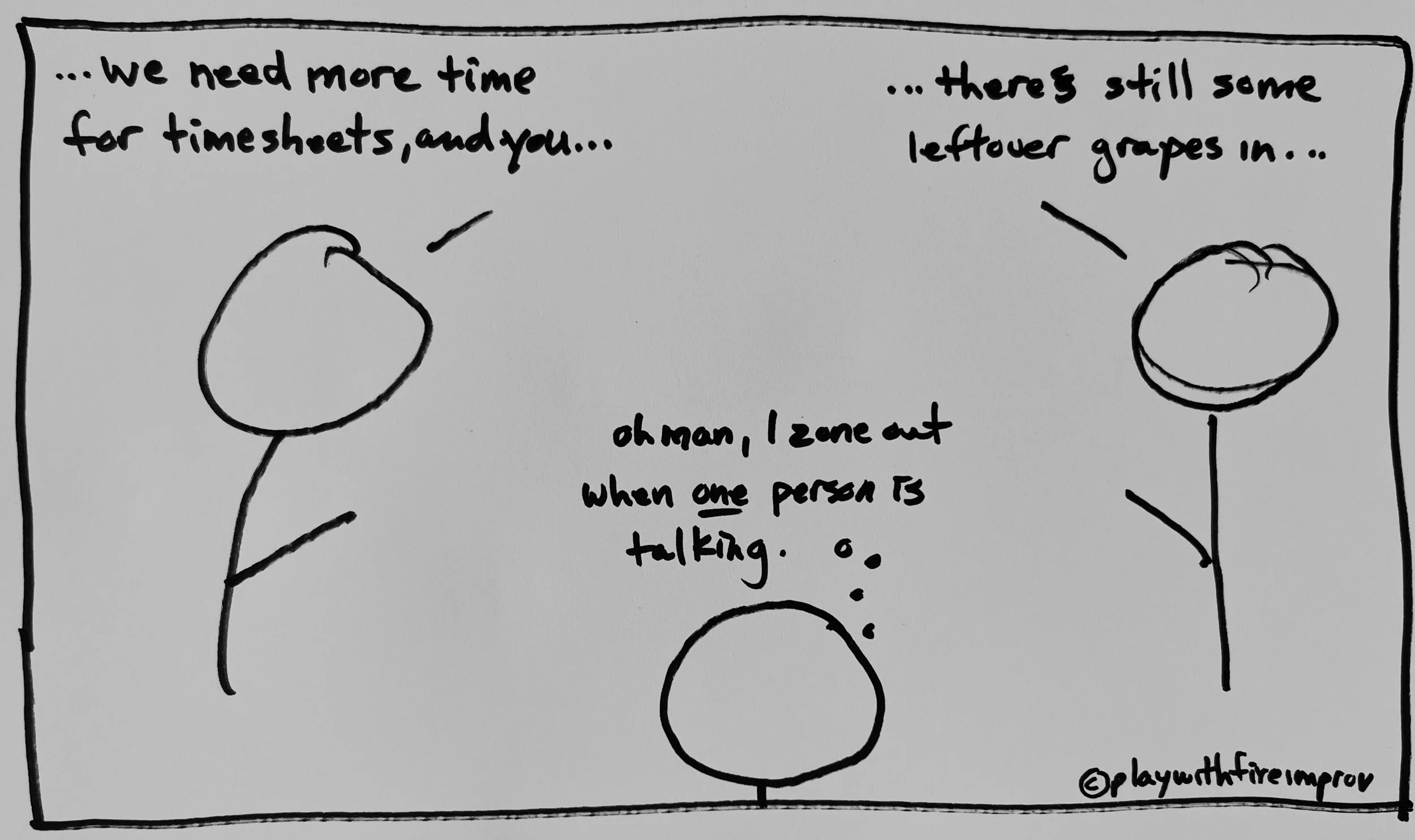
Listen to two people at the same time.


Have one person be the designated listener. Have two people talk separately at that person, about a topic of choice, for one minute straight. That’s it.


The goal will seem like it’s about how much you can hear and remember of each person.


But the real goal of the exercise is to learn that true listening is about shifting focus out of your own head. During the exercise, the listener will want to form strategies (shift back and forth quickly, close eyes, listen for key words), judge themselves and how they’re doing, judge what the two people are saying, etc.


The lesson is that you’re really listening to THREE people at once. Two people talking, and the voice in your head commenting on the proceedings. Pick one to focus on, and that will be who you actually hear.
Having miscommunications? Try this improv exercise...

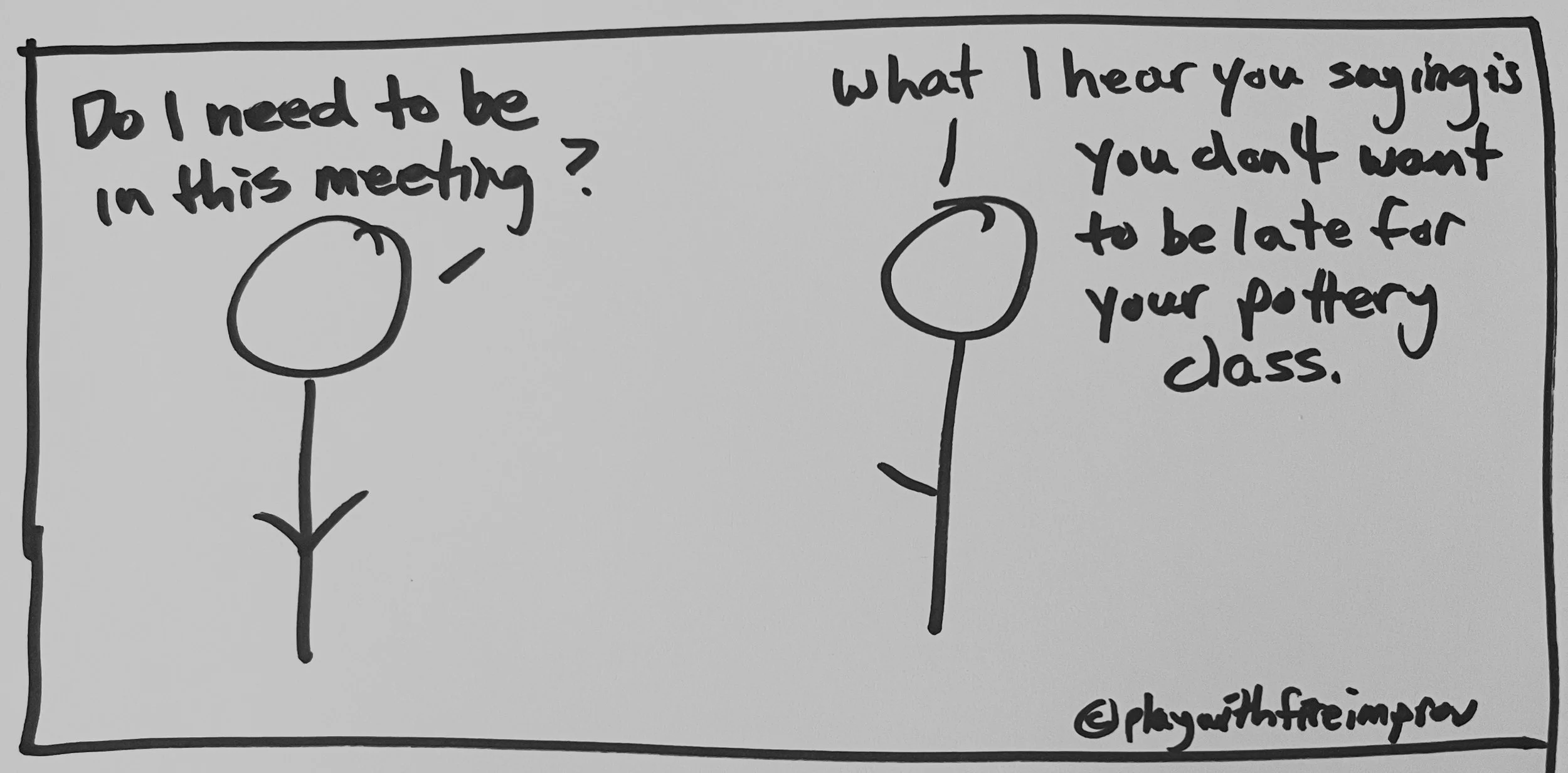
“What I hear you saying is…”

This one has two parts: a literal recap and an emotional one.

Part 1: Literal recap.

Take two people who aren’t on the same page. Have one person say what they’re feeling/thinking about the situation. The other person has to begin their response with a recap, “What I hear you saying is…” and try to repeat exactly, word for word, what was just said.

E.g.

Person 1: “She asked for more time on the project and I said ‘We can’t, we promised the client today.’”

Person 2: “What I hear you saying is… I asked for more time and you said we can’t because we promised the client they’d see the work today” (doesn’t need to be exactly the same words) and then they add their response. The other person repeats exactly, then adds their response. This makes sure we’re being heard.


Part 2: Interpretation.

Same exercise, but not as literal. They resond, “What I hear you saying is…” (inflection on the “I”) and say how their brain is interpreting those words.

E.g.

Person 1: “She asked for more time on the project and I said ‘We can’t, we promised the client today.’”

Person 2: “What I hear you saying is… (emphasis on the “I”) asking for more time would make you look bad in front of the client and you’d rather I suffered than you did.”

Then the other person repeats, then gives their interpretation. It might get heated, but it’ll go deeper into what’s really going on instead of just the endless loop of surface arguments.

Give it a try and let us know how it goes!