
Minimizing miscommunications with Improv
Let’s say you book your team for a listening skills workshop, how will you know if it worked? Are they saying, “Wait, what’s happening, I’m lost?!” less frequently? Fewer chairs being thrown? Less crying? When it comes to behaviour change, how do you measure success?
Well, first, let’s define what we’re talking about. Listening is holding focus on one thing.
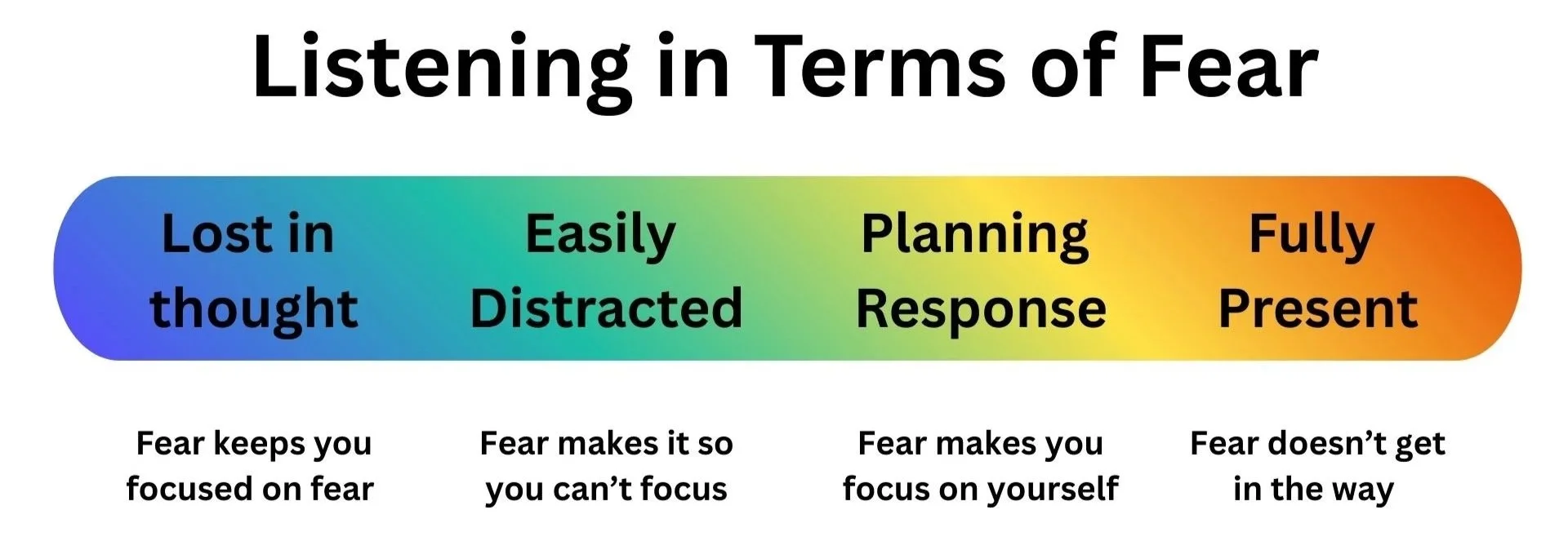
Do they currently do that? And if not, how do we make them do that? Listen, nobody wants to be a “bad” listener. So there must be a reason people check their phones, tune out to think about what else needs to be said or done, or stare out the window wistfully during status meetings. And like most of the time, the thing preventing positive growth is… fear.
Here’s the Play with Fire Improv patented Listening Scale™ to show how fear affects listening:
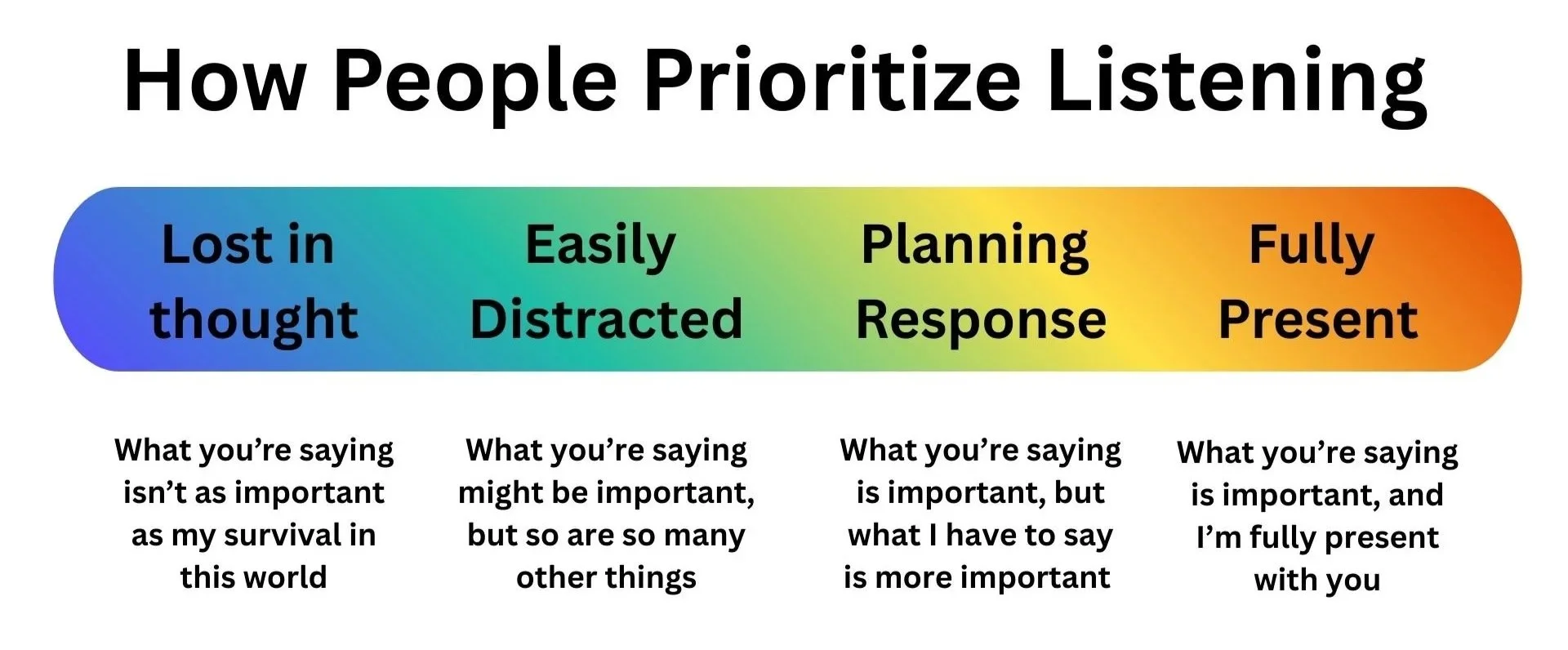
Here’s the scale in relation to what the person will prioritize when it comes to listening:
Here’s the scale in terms of how someone might reply to what was said:
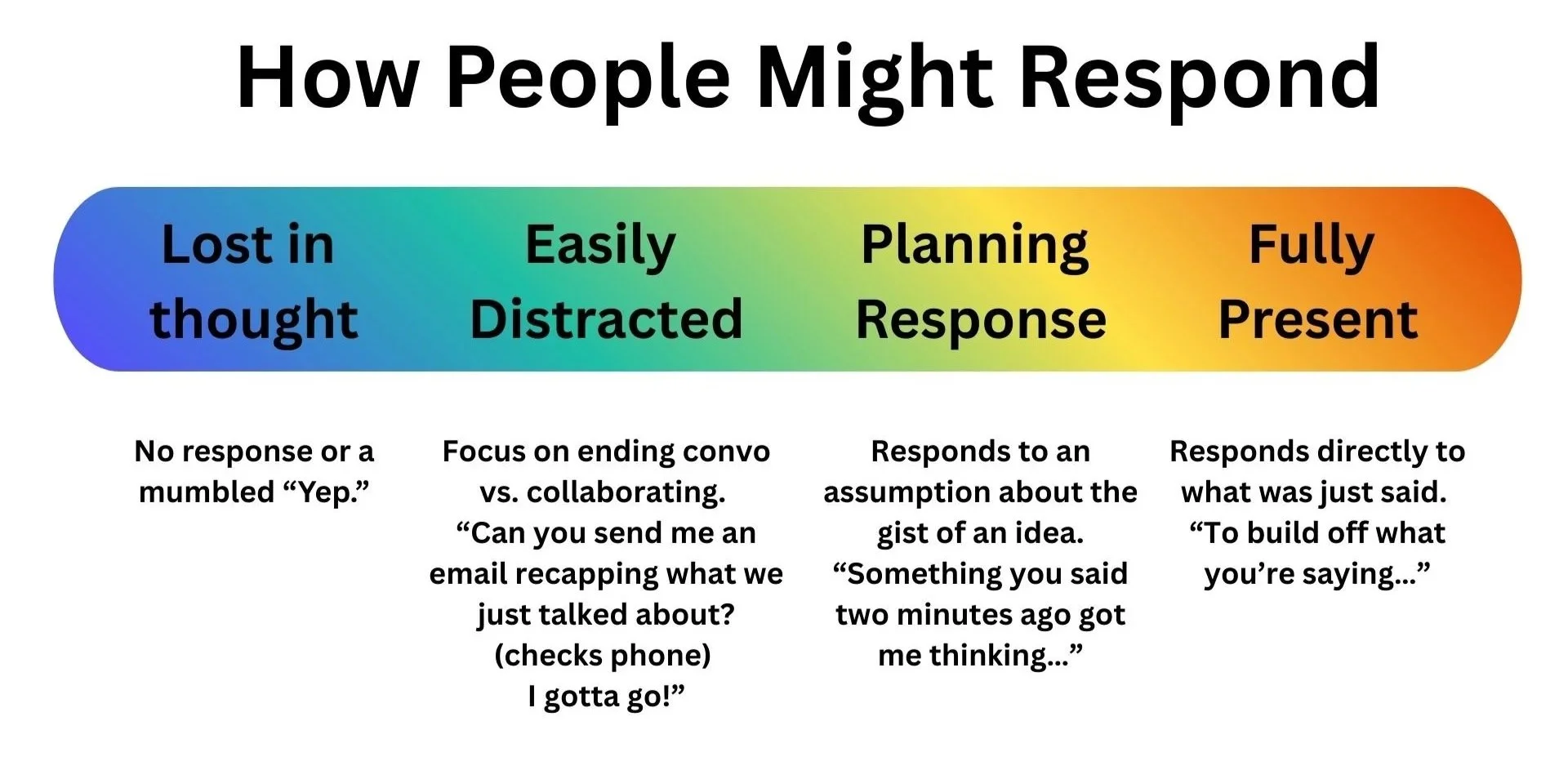
These are sliding scales, so someone might respond differently in different situations, but it gives you a sense of where someone is now in terms of their listening skill level. Now let’s talk about how improv training can help move them up the scale.
How improv helps if you’re always lost in thought.
Anxiety is tough on listening. Or having a busy mind, in general. Essentially, if you’re in your own head, your focus isn’t really on anything outside of your head. You can hear sounds, people talking, but nothing is really registering. It’s like driving somewhere and not remembering the journey.
Improv helped me be aware of other humans. Because improv is a group thing, you’re forced to pay at least some attention to what’s going on, or you’ll be completely lost. And the fear of embarrassment about being lost is usually enough to shift focus outward at least for a second or two. You might not be holding the focus just yet, but knowing that it’s even possible to shift outside your head is a good start.
How improv helps if you’re easily distracted.
There are always going to be other things that need to get done. And the feeling that they all need your attention right now. And the phones to constantly check on those things. So how do you prioritize holding focus? To quote Hale Dwoskin, of The Sedona Method fame, “Do what you’re doing when you’re doing it. Don’t do what you’re not doing when you’re not doing it.”
Improv teaches you that what’s happening right now is the most important, and only thing. When you’re building a world out of imagination, it’s like walking through the pitch black with a flashlight, the world appears as you go. What’s coming up? We’ll see when we get there. Right now, this is all there is.
How improv helps if you’re always planning your response.
I wrote a whole post on this, so I’ll link that here. But to quickly recap: most people believe that if they can sneakily plan a response in their heads while you’re still talking, their response will not only be immediate, but also better. (“Better” in this instance is not blanking or saying something stupid and feeling embarrassed.)
Improv teaches you that shifting into your head to plan your response makes it MORE likely you blank or say something stupid, because what you say has a higher risk of not being related to what the person said while you were tuned out.
How improv helps you stay fully present.
The only reason we’re not all great listeners is fear. Fear sells you on the idea that interactions are better if you go into your head to plan smart responses. Fear tells you that giving someone your full attention will look too intense. Fear says you’re missing out on something more important. Improv shows you that this moment right now is the only time that exists! That sounds pretty important.
To recap, here’s how you measure success when training the “soft skill” of listening:
1. Get a sense of where people are now on the Listening Scale™.
2. Do an Improv For Listening™ workshop (or a few).
3. Observe where they are after.
Improv helps you shift focus out of your head, so you can stay present with the other person the whole time they’re talking. In other words, improv makes you a great listener!