corporate improv training

100 Ways to Play at Work #31: Give Yourself a Nickname

Sure, historically speaking, nicknames are usually bestowed upon their recipients. My nickname when I worked at the health food store was “Gramps.” And this was in my early 20’s. In my defense, I was anxious and hated myself and others. Especially those dang kids on my lawn. (You know this is a joke because I said “lawn” and I live in Toronto.)


This is your chance to get ahead of the game. Sign off some emails with a bonus “middle” name in quotes. Drop some third person references in conversation like “Tiger agrees” while pointing to yourself. Or simply hire an actor to call you your nickname loudly throughout the day.  


You don’t need to sell everyone, just get one person hooked. Most people call me plain ole Cam, or Cameron, or Cam-Bam 3000, but I’ve also planted the seeds of some weird ones.

____

This series was inspired by people asking me “How do I keep doing improv?” after a corporate improv workshop. There are, of course, improv classes, more workshops, team building exercises you can do with your group, but these games are specifically ones you can do on your own to practice “Yes and” and get into a state of play.

Use your First Time Forgiveness™

improv anxiety forgiveness love support

Even perfectionists need to give themselves some leniency the first time they try something new. First time you ever sit down at a piano, the expectation can’t be that you instantly play a perfect concerto. Second time, yes, obviously you should be concert-ready, but first time?! There’s gotta be some “First Time Forgiveness.”

Now, keep FTF in mind when I say, every single conversation you have in life, you’re having for the first time. Even conversations you feel like you’re having for the 100th time, it’s never happened in this exact context, with these exact words. Some part of it is always new.

Everything we do has some degree of newness. Some percentage of it is happening for the first time. And the percentage that’s happening for the first time needs to come with FTF.

Let’s say you go to your first improv class. Congrats, btw. And you and the class play the improv game where each person takes a turn adding one word to the story. Afterwards, you think, “That was hilarious, improv is amazing, and the story was fun, but wasn’t… perfect.” But hey, it’s your first time ever, so you can’t be too hard on yourself.

Then you play the same game again, but this time going in reverse order of the class. Second time, so you gotta think you’ll be better than the first time, but technically it is your first time going in this order.

Then you play it again, but this time in teams of two. Third time overall, but first time in pairs.

It could be your 100th time playing it, and something will always be different, new, the first time.

So when it doesn’t go perfectly (because things don’t, and that wouldn’t be as fun anyway) and you want to judge yourself, you have to factor in FTF. Instead of beating yourself up thinking, “I should be 100% great at this by now,” think, “I should be 80% great at this by now. But I should also go 20% easy on myself because it’s the first time playing it with these people, in this order, with this instructor, in these shoes… (or whatever is new this time).”

If there’s anything you’re being hard on yourself about right now, take a moment to think about what percentage was new/different this time. “I’ve done this presentation a thousand times… but never at this venue.” “I’ve met new people before… but never this person.” “I’ve done backflips plenty of times… but not usually with the whole office watching… anyway, here goes!”

Even if it’s only 1% different. Give yourself that 1% forgiveness for not being perfect. After all, you can’t be expected to be perfect, you’re living this exact moment for literally the first time.

How to Measure “Soft Skills” in Improv Training: Active Listening

Minimizing miscommunications with Improv


Let’s say you book your team for a listening skills workshop, how will you know if it worked? Are they saying, “Wait, what’s happening, I’m lost?!” less frequently? Fewer chairs being thrown? Less crying? When it comes to behaviour change, how do you measure success?


Well, first, let’s define what we’re talking about. Listening is holding focus on one thing.


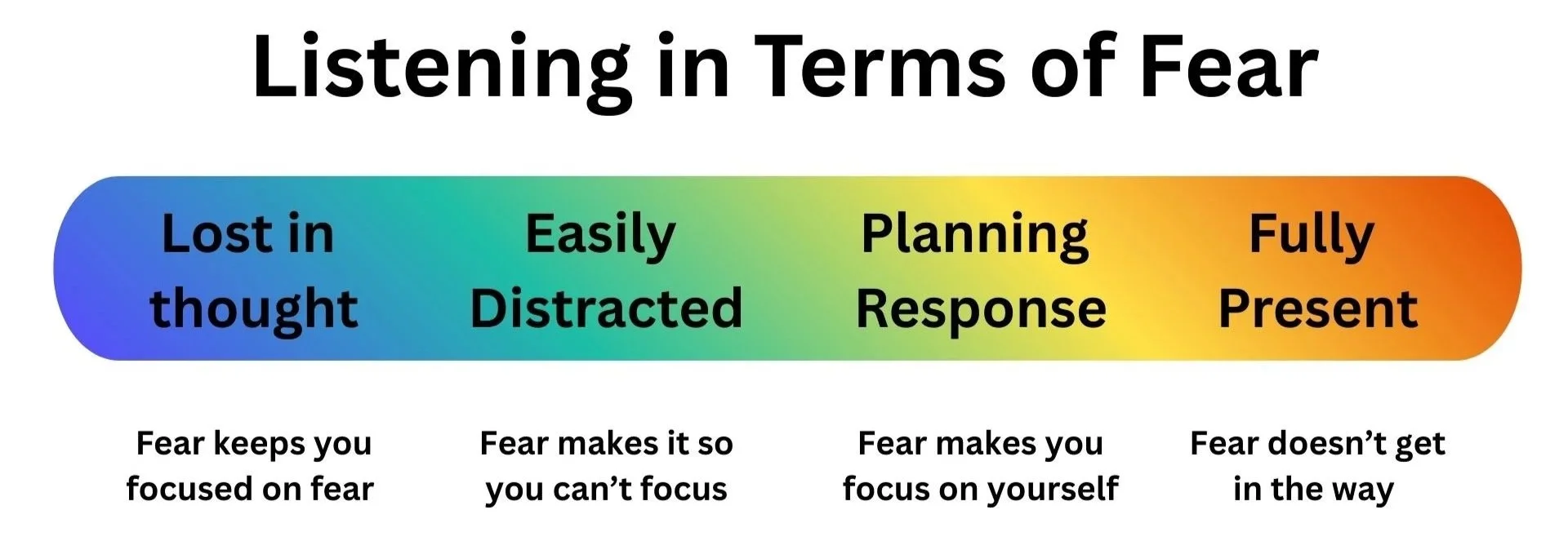
Do they currently do that? And if not, how do we make them do that? Listen, nobody wants to be a “bad” listener. So there must be a reason people check their phones, tune out to think about what else needs to be said or done, or stare out the window wistfully during status meetings. And like most of the time, the thing preventing positive growth is… fear.


Here’s the Play with Fire Improv patented Listening Scale™ to show how fear affects listening:

improv training listening skills exercises fear

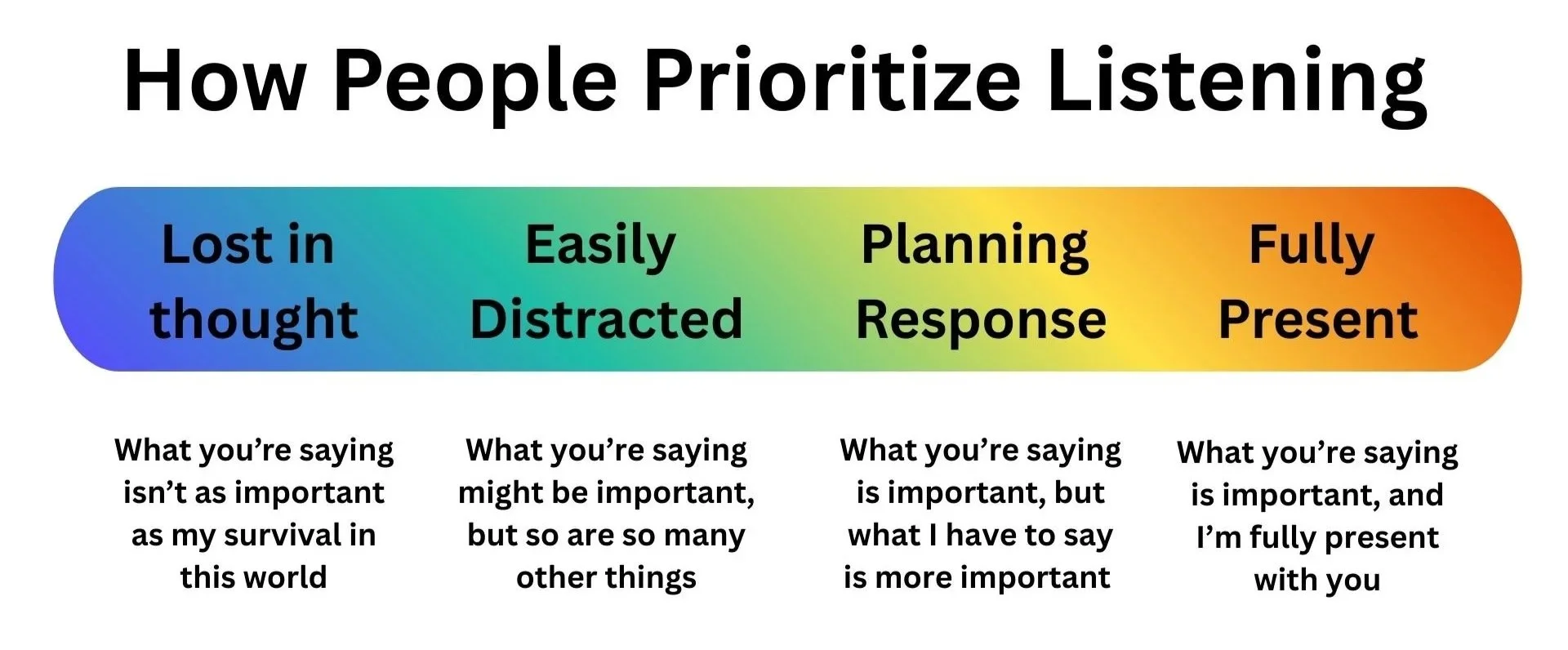
Here’s the scale in relation to what the person will prioritize when it comes to listening:

improv training active listening skills exercises important

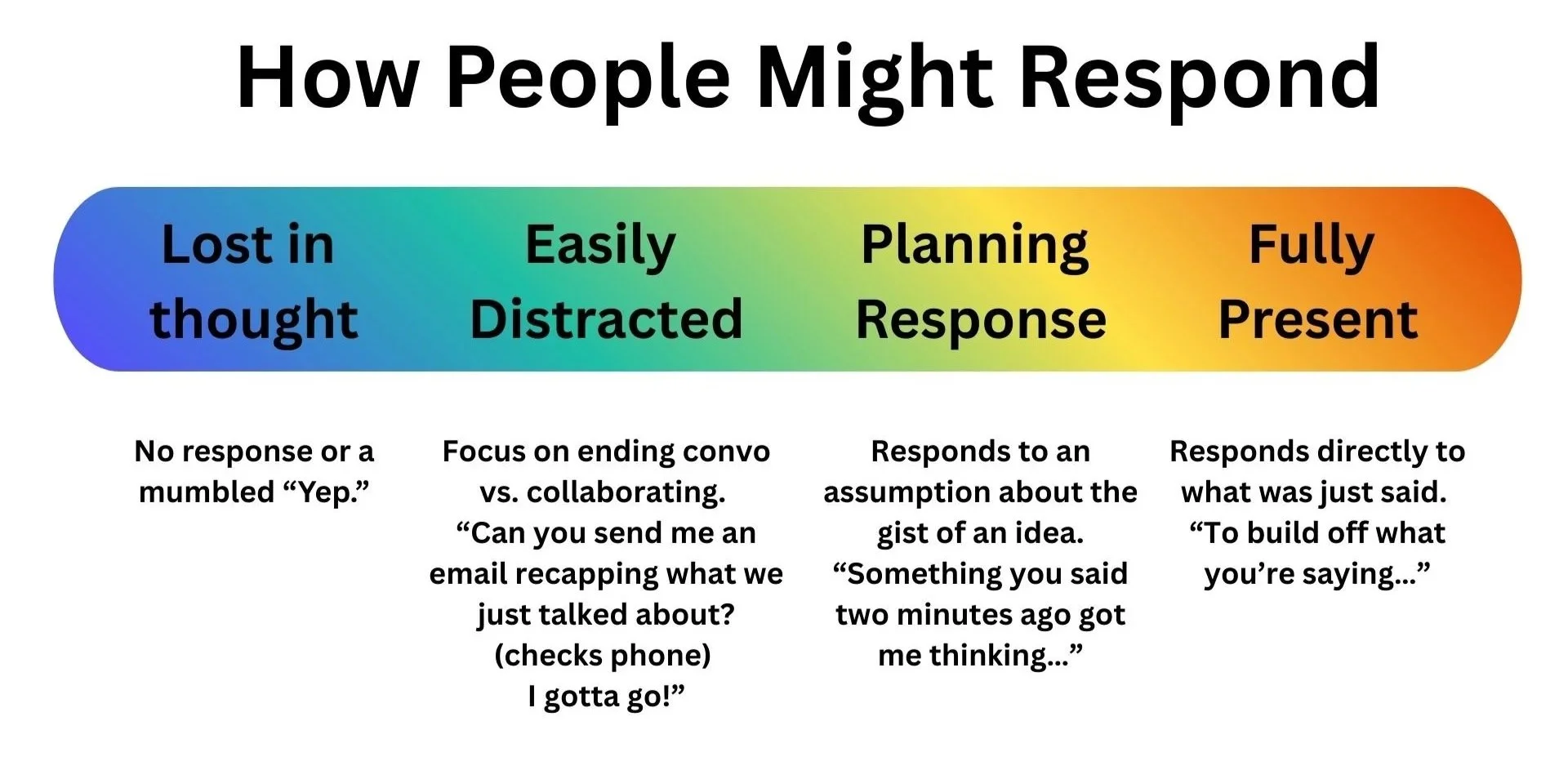
Here’s the scale in terms of how someone might reply to what was said:

improv training active listening skills exercises respond

These are sliding scales, so someone might respond differently in different situations, but it gives you a sense of where someone is now in terms of their listening skill level. Now let’s talk about how improv training can help move them up the scale.


How improv helps if you’re always lost in thought.


Anxiety is tough on listening. Or having a busy mind, in general. Essentially, if you’re in your own head, your focus isn’t really on anything outside of your head. You can hear sounds, people talking, but nothing is really registering. It’s like driving somewhere and not remembering the journey.


Improv helped me be aware of other humans. Because improv is a group thing, you’re forced to pay at least some attention to what’s going on, or you’ll be completely lost. And the fear of embarrassment about being lost is usually enough to shift focus outward at least for a second or two. You might not be holding the focus just yet, but knowing that it’s even possible to shift outside your head is a good start.


How improv helps if you’re easily distracted.


There are always going to be other things that need to get done. And the feeling that they all need your attention right now. And the phones to constantly check on those things. So how do you prioritize holding focus? To quote Hale Dwoskin, of The Sedona Method fame, “Do what you’re doing when you’re doing it. Don’t do what you’re not doing when you’re not doing it.”


Improv teaches you that what’s happening right now is the most important, and only thing. When you’re building a world out of imagination, it’s like walking through the pitch black with a flashlight, the world appears as you go. What’s coming up? We’ll see when we get there. Right now, this is all there is.


How improv helps if you’re always planning your response.


I wrote a whole post on this, so I’ll link that here. But to quickly recap: most people believe that if they can sneakily plan a response in their heads while you’re still talking, their response will not only be immediate, but also better. (“Better” in this instance is not blanking or saying something stupid and feeling embarrassed.)  


Improv teaches you that shifting into your head to plan your response makes it MORE likely you blank or say something stupid, because what you say has a higher risk of not being related to what the person said while you were tuned out.


How improv helps you stay fully present.


The only reason we’re not all great listeners is fear. Fear sells you on the idea that interactions are better if you go into your head to plan smart responses. Fear tells you that giving someone your full attention will look too intense. Fear says you’re missing out on something more important. Improv shows you that this moment right now is the only time that exists! That sounds pretty important.


To recap, here’s how you measure success when training the “soft skill” of listening:

1.    Get a sense of where people are now on the Listening Scale™.

2.    Do an Improv For Listening™ workshop (or a few).

3.    Observe where they are after.


Improv helps you shift focus out of your head, so you can stay present with the other person the whole time they’re talking. In other words, improv makes you a great listener!

26 Ways Improv Can Help You In 2026

improv new year's resolutions 2026

Improv helps with everything!

Did you write a list of New Year’s Resolutions with the plan to do a bunch of different tasks to achieve those goals? Simplify, man! Just do improv!

Improv helps you…

1) Laugh more.

2) Play characters that don’t have your problems.

3) Get out of your head.

4) Be silly and be okay being silly.

5) Practice failing and recovering.

6) Use your imagination to create wonderful things.

7) Tell fascinating stories.

8) Move your body in interesting ways.

9) Think differently and be okay with others thinking differently.

10) Adapt to the unexpected.

11) Let go of expectations.  

12) Surprise yourself! (Improv gets you doing things you had no idea you could do.)

13) Be open to the ideas of others.

14) Love and support the ideas of others.  

15) Connect with people on a deeper level.

16) Judge less. Yourself and others.

17) Accept things as they are. It’s not settling, just not denying.  

18) Take yourself and any “failings” as little less seriously.

19) Trust yourself more. You can do this.  

20) Feel more confident.

21) Make bold choices. (Or make any decision, then boldly follow through.)

22) Make new friends.

23) Know that you are enough.

24) Release stress from your body and mind.

25) Focus on all the little moments of joy.

26) Play!

If you like the sounds of that, reach out to book an improv workshop today!

100 Ways to Play at Work #28: The Floor Lines Are Lava

team building activities toronto improv yes and

A bit of a combo game here, mainly because going full “floor is lava” would probably get you a little too much attention at work. So we’re combining it with a mix of “step on a crack,” and “the way some baseball pitchers skip over the foul line as they’re coming off the field as some sort of superstition.”


In short, when you walk about, don’t touch any lines on the floor. That’s the game. Simple rules. If you do touch a line, obviously you’re the reason the Blue Jays lost, and you should be very mad at yourself. (Yes, I’m still thinking about it.)


Bonus challenge: Use this as impetus to go for more walks, instead of a reason to avoid them. Go for the win!

____

This series was inspired by people asking me “How do I keep doing improv?” after a corporate improv workshop. There are, of course, improv classes, more workshops, team building exercises you can do with your group, but these games are specifically ones you can do on your own to practice “Yes and” and get into a state of play.

100 Ways to Play at Work #26: Remember your Mantra

improv team building exercises games activities

Another great character POV game. Go about your normal workings, but keep your mantra in mind, and see how it changes the way you do things. If your mantra is “Just be” then you might remember to stay zen during those tense moments. If your mantra is “This is my time” then you might feel inspired to greatness, or not tolerate useless meetings. Or maybe your mantra is “Can we please go one second without talking about AI?!”


What’s your mantra going to be today?

____

This series was inspired by people asking me “How do I keep doing improv?” after a corporate improv workshop. There are, of course, improv classes, more workshops, team building exercises you can do with your group, but these games are specifically ones you can do on your own to practice “Yes and” and get into a state of play.

Improv for Anxiety for Business: What if my staff is terrified of an improv workshop?

A lot of times when I’m working with a company to plan their improv workshop, it’ll be brought up that amidst all the excitement and buzz for the event, there’s also a fair amount of trepidation. Meaning, some of their coworkers/staff have come up to them and said, “Do I have to do the improv?” “Will we have to go on stage?” “What if I’m not funny?” All the fun stuff our brains think about.


So they ask me, do you know how to handle a workshop when some (or most) of the people are terrified and don’t want to be there? And I’ll say, honestly, that’s my specialty!


I go into corporate workshops almost the same way I go in to teach an improv for anxiety class. Knowing that there’s a mix excitement and nervous energy. And quickly explain that improv isn’t about being individually funny or showing off, it’s about connection and collaboration, and building ideas together without judgement. In other words, goal #1 is to create a safe space.


For any adult, the idea of “being silly” can be scary. Most of us have been told off for “goofing around” since we were kids. Parents, teaches, managers all telling us to be more serious. Add to that the fact that during the workshop you’re still technically “at work” and depending on who participates, you might be acting goofy in front of your boss(es).


But there’s no reason we can’t do our jobs seriously AND also enjoy them. We can be talking to coworkers about an important project, and yet still enjoy the conversation. Humans instinctively want to play and connect and enjoy life, it’s just been a while since we felt “allowed.”


Improv is as a place where you’re allowed to have fun. And to put everyone at ease, no, I’m not gonna start the workshop with “Whose Line Is It Anyway?” style scenework, where two people have to be funny while everyone else watches. Sure, I could probably find two volunteers willing to do it, but I can tell you the anticipation/dread from the people “waiting their turn” won’t be fun. As much as improv is about stretching comfort zones, it ain’t about breaking them.


Think of improv as a series games and exercises designed to get people playing together like kids used to during recess. Moving around and being silly, connecting with your inner child, your free to be creative side, your state of play.


Because yes, an improv workshop is going to help everyone think faster on their feet, adapt to change, listen and communicate more effectively, feel more confident, and all that good stuff, but one of the main keys is that you’re laughing while learning. So it’s important that they’re having fun. Because it’s easier to play and laugh when you’re not so scared. 

100 Ways to Play at Work #21: Move Differently

Instead of slowly getting up, jump out of your chair. Walk with your arms swinging fully. Bounce with each step. Hold your head high. Moving your body differently will make you think and feel differently.


I sometimes walk around the house like Robocop, and when I change directions, I turn my head first, then upper body, then legs. Does it look cool? Depends who you ask. Does is feel cool? Yes.


You don’t need to go full dance number, for some of us just getting up from our chairs more often is different enough.


Now get moving!  

____

This series was inspired by people asking me “How do I keep doing improv?” after a corporate improv workshop. There are, of course, improv classes, more workshops, team building exercises you can do with your group, but these games are specifically ones you can do on your own to practice “Yes and” and get into a state of play.

The 10 “Z's" of Choosing the Best Team Building Activities

As we all know, any list that uses all the same letters is clearly more thought out, and not just a gimmick. It’s like when common sayings rhyme, they’re just better. And this list should be considered the most definitive, based on Scrabble scores.

Here are the 10 “Z’s” you need to make sure you’re choosing the perfect team building activity for your staff/executives/board members/friends and family.


Zeal

It’s gotta be an activity people want to do with great energy and enthusiasm.


Zen

It’s gotta be something that connects them to their senses and intuition.  


Zone

It’s gotta get them in the zone. Like, locked in.


Zig-zag

Hmmm, okay, yeah, it’s gotta help them be able to pivot their thinking in the opposite direction, and then back again.


Zestful

Um, did I mention it’s gotta be something people do with great energy and enthusiasm?


Zoo

It’s gotta have some level of confusion and disorder. And people behaving like animals.


Zombie

It’s gotta break them out of their regular behaviour patterns.


Zarf

That thing that goes over a coffee cup to keep you from burning your hands. So, like, the activity should help your team protect each other from… heat and stuff.


Zoomies?

It’s gotta get them running around like dogs that need to get rid of some excess energy, because they’ve been sitting in front of the computer all day.


Zip-Zap-Zop

It’s gotta be an improv game. It’s fun. You should try improv.


Wondering which team building activity does it all?! Including the last one, which is specific to improv? It’s improv!

Book your improv workshop today and reach the zenith of team building activities!

How Fortune 500 companies use improv to build their leadership skills.

PART 1: Improv makes you a better decision maker.

improv team building leadership skills activities toronto

Imagine all hell is breaking loose. Someone yells out, “All hell is breaking loose, what should we do?!” You hear a series of panicked “I don’t know, I don’t know!” then, breaking through the cacophony, you say, “We could try [anything really]” All heads are going to turn to you. Because you’re now the leader.


Leaders are the people who make decisions, and in turn, others look to to make those decisions. Especially under pressure.


So if you’re in management, or want to be, and you want to hone your decision making skills in moments of pressure, improv can help. Because improv is essentially just a series of decisions.


Imagine you walk out onto an empty stage with another person. You need to build a world out of imagination and show it to the audience. Where are you? Who are you? What are you doing? All decisions that need to be made pretty quickly. How do we know each other, how do we feel about each other, how many wings does a squirrel dragon have…? In improv, there are infinite options, so you’ve gotta choose wisely. And by wisely, I mean, just make a choice!  


Let’s say the scene starts with the other character saying to you, “Is that a new cape?”

You have a couple seconds to shake off the fact that you’re not actually wearing a cape in real life and accept the new reality being proposed, then decide some of the following:

  • Why are you wearing a new cape? Is it to impress the other character? Job interview? Laundry day?

  • Are you a superhero, or just fashionable?

  • Is it new as in brand new, or just new to their character seeing you in it?

  • Did you buy it, or make it, or a combination of both?

  • What’s the difference from your old cape if you had to describe it?

  • Who would ask you that? How do you know each other?

  • Did they sound curious? Impressed? Disappointed?

  • How much does them liking it matter to you?

There might be moments where you might think, “I don’t know.” But you do know, because you’re the one creating the world. Just like in life, you just make a choice, then make it work.

In conclusion, if you want to practice decision making, a key leadership skill, yeah, you should definitely try improv.


PART 2: Improv helps you care about others.

100 Ways to Play at Work #20: Get Emotional!

Nothing drives words out of your mouth like emotions. Pick one and give it a go. You might be thinking, but I’m not allowed to be emotional at work (other than anger, men are allowed to be angry all the time and call it “passionate”). I’m not saying start at a 10 on the emotional scale, just dip the toes in the water.


If someone comes up for a convo, think to yourself, “I’m gonna be a little excited/paranoid/surprised/proud/nostalgic and let it give your words some temperature.


I used to have just apathy and anger (aka fear) and my therapist hoped that one day I’d have the full range of emotions. So I practiced them with improv!


How you feelin’?

____

This series was inspired by people asking me “How do I keep doing improv?” after a corporate improv workshop. There are, of course, improv classes, more workshops, team building exercises you can do with your group, but these games are specifically ones you can do on your own to practice “Yes and” and get into a state of play.

Top 3 Reasons your Staff hates Team Building Activities

improv team building activities toronto

#1: They don’t want to look stupid.

Most team building exercises are designed to be fun. Which sounds great to the person booking, and potentially terrifying to the people expected to have this so called “fun.” Fun sounds silly, and they don’t want to look silly. It’s embarrassing to act like a kid when you’re not a kid (especially in front of coworkers).

You see, adults not only forget how to have fun, they’ve been trained that fun is bad. Having fun means you’re not working. And you’re supposed to be working! So even if the boss says it’s okay to play, it takes time to get people feeling safe enough to be silly.

Mainly because, they don’t want to fail. That’s the real “What if I look stupid?” “What if I try something new and I’m not good at it and I fail and everyone thinks I suck?” Most people are terrified of failure. Which is why a lot of team building events are built around alcoholic drinks.

Solution: Avoiding silly, while it seems like what they want, isn’t going to help anyone grow. I’m proposing we go completely the other way. Stretch their comfort zones by going super silly, with potential to fail, but in a way that they fail together, and feel safe from judgement. That’s the key. And that’s the “Yes and!” of improv!


#2: They’re busy.

If it’s during the day, they’re busy with work. They might like the idea of fun, but if the deadlines stay the same, that “fun” is just gonna feel like another thing crammed into their already busy schedule.

If it’s during the evening, they’re busy with life. They’ve families, and friends, chores, health issues, and a whole world outside of work that let’s be honest, probably still requires them to work.

Solution: Keep it short and sweet. Have the event come to you. No prep needed. Just walk down the hall, join the improv workshop, have fun for an hour, then back to work feeling refreshed. And better for it. Because one thing that can help them overcome Reason #1 and #2 is that the activity will help them. Which brings us to…


#3: They don’t see the value in it.

People want to clearly understand what the activity is, and what they’re going to get out of it. How is this going to help me grow at my job or life? Basically, will doing this and learning this skill help me get better… and therefore make more money?

Or, if they’re not motivated by money (rare, but they exist), will this help make my life easier? Will I feel more at ease working with others? Will this make new ideas come more effortlessly?

If you’re going to get your staff to look past Reasons #1 and #2, then the activity has gotta be something they know for sure will benefit them.


Solution: As always, improv. Most people understand that being good at improvising helps with every interaction you have in life. The ability to adapt to change without panic. To think on your feet. Get good at small talk, better at presenting, thinking more creatively, improv makes you better at everything!


In conclusion, your staff might hate the idea of a team building activity, and we understand that. But it all melts away when, within minutes, they’re all laughing and having fun together without judgement, stretching their comfort zones and learning new skills.

Click here to book your team a workshop they’ll love!

100 Ways to Play at Work #19: Questions Only

It’s like Jeopardy rules. Hold down a “normal” conversation, but your end is always phrased in the form of a question. The key is to still answer them, and keep the convo going.

Bonus: It’s actually a really good way of being curious and finding out about others.

Eg.

Hey Kevin, I’m gonna need you to optimize the circle back on the AI.

How high a priority is this?

I kinda need it today, if that’s possible.

Today 5pm, or today midnight?

Anytime today would be great.

Wouldn’t tomorrow be considered today when we get there?

What?

Are you also playing the questions game?

____

This series was inspired by people asking me “How do I keep doing improv?” after a corporate improv workshop. There are, of course, improv classes, more workshops, team building exercises you can do with your group, but these games are specifically ones you can do on your own to practice “Yes and” and get into a state of play.

What’s a fun activity to do for a company holiday party?

improv team building activities toronto holiday party

Okay, I’m a little biased, but since you’re asking me specifically, I’d have to say improv.


But let’s break it down for a sec. What do employees want in a holiday party?


First thing is probably booze. Ideally, free booze.


Then, to have fun. Have an activity that gives them something to do so they don’t have to resort to small talk.


Which brings me back to improv.


  • It’s super fun, to the point where they wouldn’t realize they’re learning key skills (ironically, one of them being better at small talk).

  • It gets everyone involved, even the shy ones, believe it or not.

  • It gives people the chance to show how naturally or unnaturally funny they are.

  • It’s a chance for everyone to laugh and play together.

Add some booze to that and you’re golden. ;)


Reach out and we’ll help you build that hilarious holiday party!

10 Best Team Building Activities to do in Toronto (that are all Improv)

improv team building exercises games activities toronto

#10 Ziplining Improv!

A thrill ride of excitement. You’ll feel like you’re falling without a net!


#9 Cooking Class Improv!

Learn some new skills that’ll make every dinner party a success!


#8 Escape Room Improv!

Solve mental puzzles to help you break free from being trapped in room with a bunch of coworkers.


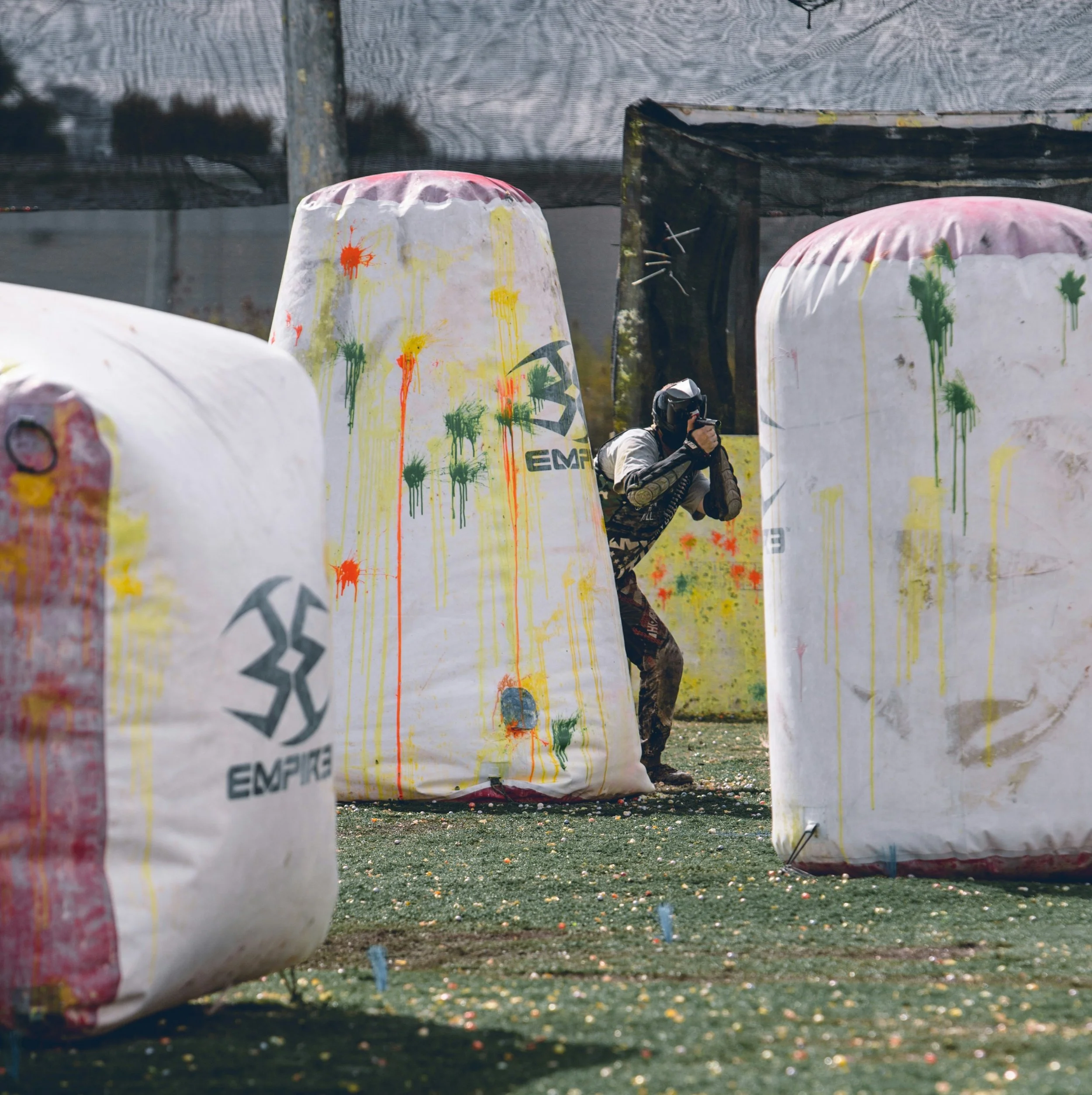
#7 Paintball Improv!

Outwit, outplay, and outlast in this exciting physical team challenge.  


#6 Wine Tasting Improv!

Hone your senses to help you truly experience and savour the moment.


#5 Trivia Night Improv!

Test your knowledge in real time on a wide array of different topics.


#4 Boat Cruise Improv!

Go on a journey together to enjoy the sights and sounds of the world around you.


#3 Scavenger Hunt Improv!

Run around looking for random objects, meeting random people, doing random things.


#2 Murder Mystery Improv!

Play characters and try to solve a mystery without knowing who did it, or any of your lines.


#1 Karaoke Improv!

Sing popular songs together, knowing nobody’s judging the quality of your voice, they’re just there to have a good time.


If you’re thinking of trying any of these team building activities, reach out to us and we’ll help make it happen, as long as it’s improv.  

100 Ways to Play at Work #18: Props

In improv, you can take any object and use your imagination to make it something else. ​F​or example, a pen ​can be a moustache, a cigar, an alien antennae, a giant tower in a miniature world.

In real life, you can ​g​o beyond imagination and actually use things for more than their intended purpose. ​There’s the obvious, coffee mug that hold​s pens (mini towers), or paper clips (mini racetracks). ​But go further. Your rolly chair is a vehicle. Your desk a dance floor. Use your tie as a belt. Use your belt as a tie. Use your post-it notes as a dress.

You just gotta think to yourself, what else can this​ thing ​b​e or ​d​o?

____

This series was inspired by people asking me “How do I keep doing improv?” after a corporate improv workshop. There are, of course, improv classes, more workshops, team building exercises you can do with your group, but these games are specifically ones you can do on your own to practice “Yes and” and get into a state of play.

Top 3 Reasons to Choose Improv for your next Team Building Event

team building activities toronto improv

#1: Improv is Fun(ny)!

At this point, if you’re doing a team building event, it’s pretty much expected to be fun. But improv goes beyond fun, it’s funny. Sure, there might be funny moments in other events, like getting stuck halfway up a rock climbing wall, or a paintball to the butt, but improv is designed to bring laughs. And the best part is, the team are the ones creating the laughs, together.


#2: Improv is Fun for Everyone!

There are always going to be shy people who want to hang back, and boisterous leaders who want to take control. The funny ones, and people who don’t realize how funny they are. The thing with improv is that everyone participates. And everyone succeeds. Because when you’re building comedy together, the laughs are shared.


#3: Improv is a Key Skill!

No matter how much we plan, every interaction we have is improvised. So it’s a pretty helpful skill to hone. Amidst all the laughing and having fun together, your team is learning how to support and collaborate, think on their feet, stretch their comfort zones, and adapt to change in the moment. Think escape room, but the room keeps changing, and nobody’s yelling.


If you’re looking for a fun and funny team building workshop, where everyone enjoys being involved, and learns keys skills, check out our corporate improv workshops or get in touch and we’ll build the event for you.

100 Ways to Play at Work #17: Rhyme Time!

As usual, strike up that “normal” conversation. This time the game is: whatever word they end with, make sure your last word rhymes with it.

Bonus points if your sentence is roughly the same number of syllables. You can even keep a beat going in your head. This is great practice if you ever find yourself performing on an A cappella musical improv team (shout out to JerJosh & the SteveCams).

Eg.

Hey Heather, check this AI thing out!
Oh amazing, what’s it all about?
Well, it’s some art I’ve been working on, you know, on the side.
You should share it around, that’s not something to hide.

(Full disclosure, the art wasn’t great, but in the moment Heather couldn’t think of a different rhyme.)

____

This series was inspired by people asking me “How do I keep doing improv?” after a corporate improv workshop. There are, of course, improv classes, more workshops, team building exercises you can do with your group, but these games are specifically ones you can do on your own to practice “Yes and” and get into a state of play.

Winner of Toronto’s Best Improv Team Building Workshops Award

Play with Fire Improv was recently awarded Toronto’s Best Improv Team Building Workshops Award, or TBITBWA, or “T-bit-bwah” as some call it, and Cam Algie (founder and lead facilitator of Play with Fire Improv) couldn’t be happier.


“Yeah, I was honoured to hear the news that we’d won,” says Cam, “it’s obviously something we’ve work hard to be great at, and while getting amazing feedback from our clients is award enough, receiving an actual award is also nice.”


According to the judging committee, they were the clear favourite. “They definitely deserve the prestigious award, they truly care about their clients, and run amazing customized workshops for teams of all kinds. I’m proud of them and happy they won, and it wasn’t even a biased choice,” said head judge, Cam Algie.


If you’re interested in some award-winning improv training for your team, check out Play with Fire Improv’s corporate improv training page, or contact them to make it happen.

improv team building activities toronto

Definitely an esteemed improv award and not a softball trophy.

100 Ways to Play at Work #16: Make Art

Don’t just staple pages together, staple a little picture. Make a flip book out of post-it notes. Bend paperclips into animals. Use highlighters as watercolour.


Take 10 minutes to just create… something. Go over to the photocopy room right now, grab some paper scraps, tape, markers and make your (daily? weekly?) masterpiece to display at your desk, or on the office fridge.  


It’s not about selling the art, or doing a good job, it’s simply enjoying the act of creating something new.


What will you art today?

____

This series was inspired by people asking me “How do I keep doing improv?” after a corporate improv workshop. There are, of course, improv classes, more workshops, team building exercises you can do with your group, but these games are specifically ones you can do on your own to practice “Yes and” and get into a state of play.