Team Building Activities

26 Ways Improv Can Help Your Business In 2026

What are you going to do this year to help your team? You could book a team building workshop, an active listening workshop, a presentation skills workshop—or just cover all the skills in one go, with improv!


Improv helps with Listening & Communication Skills

 1) Improves listening skills through the practice of staying present and focused

2) Hones non-verbal communication, reading body language, energy and tone

3) Develops openness to different ways of thinking

4) Enables thinking on your feet


Improv helps with Collaboration & Team-building

5) Promotes building ideas together through “Yes, and”

6) Encourages the support of the ideas of others

7) Bonds the team over stories and laughter

8) Builds trust among team members and other departments


Improv helps with Creativity & Innovation

9) Breaks rigid thought patterns with outside the box thinking

10) Lessens fear of making mistakes to open up to creative problem solving

11) Opens the mind to many different perspectives and points of view

12) Shifts the mindset to see ideas in terms of potential vs pitfalls


Improv helps with Confidence

13) Forms the ability to handle change and uncertainty without panic

14) Keeps the fear of failure and the judgement of others from holding them back

15) Builds trust in themselves and the team

16) Increases the willingness to take calculated risks


Improv helps with Leadership & Management

17) Harnesses the ability to stay calm under pressure, respond vs react

18) Cultivates the ability to make decisions on the spot

19) Promotes inclusive leadership, focusing on delegation and empowerment

20) Focuses on emotional intelligence with authenticity and empathy


Improv helps with Culture

21) Creates a safe, supportive environment with “Yes and”

22) Fosters a sense of shared ownership of outcomes (we’re in it together)

23) Reduces miscommunications, misunderstandings through clear communication

24) Aids in conflict resolution, objection handling and negotiation flexibility


Improv helps you find Joy in what you do

25) Improv is fun, which improves morale and engagement

26) Improv helps you play!

If any of that sounds good, reach out to book an improv workshop!

26 Ways Improv Can Help You In 2026

improv new year's resolutions 2026

Improv helps with everything!

Did you write a list of New Year’s Resolutions with the plan to do a bunch of different tasks to achieve those goals? Simplify, man! Just do improv!

Improv helps you…

1) Laugh more.

2) Play characters that don’t have your problems.

3) Get out of your head.

4) Be silly and be okay being silly.

5) Practice failing and recovering.

6) Use your imagination to create wonderful things.

7) Tell fascinating stories.

8) Move your body in interesting ways.

9) Think differently and be okay with others thinking differently.

10) Adapt to the unexpected.

11) Let go of expectations.  

12) Surprise yourself! (Improv gets you doing things you had no idea you could do.)

13) Be open to the ideas of others.

14) Love and support the ideas of others.  

15) Connect with people on a deeper level.

16) Judge less. Yourself and others.

17) Accept things as they are. It’s not settling, just not denying.  

18) Take yourself and any “failings” as little less seriously.

19) Trust yourself more. You can do this.  

20) Feel more confident.

21) Make bold choices. (Or make any decision, then boldly follow through.)

22) Make new friends.

23) Know that you are enough.

24) Release stress from your body and mind.

25) Focus on all the little moments of joy.

26) Play!

If you like the sounds of that, reach out to book an improv workshop today!

Why you suck at listening, and how improv can help.

improv team building listening skills

You’re listening wrong. But don’t worry, it’s a pretty simple fix. Right now you’re trying to multitask. Listen to what the other person is saying AND plan your response ahead of time. You can’t. It’s impossible. Just ask science.


A quick google (or Chat, for you kids) of “peer reviewed study multitasking impossible” and you’ll find something along the lines of “The human brain is incapable of completing more than one cognitive task at a time. Instead, it rapidly switches back and forth among competing tasks.” Meaning, you can’t do both.


But don’t worry, that’s good news. Because you don’t need to listen to both. The only thing standing in the way of you being a great listener, is choosing to focus on the person talking to you, over the thoughts in your head.


Now this seem might seem like an obvious choice, but that’s when your fear steps in. The fear that if you don’t plan your response in advance, you’ll blank or say something stupid.


Well here’s even more good news! You don’t need to overcome that fear. Just realize it’s wrong. Planning in your head actually makes it MORE likely that you blank or say something stupid.


Blanking isn’t the result of no thoughts, it happens when there are too many thoughts all at once, and it’s too overwhelming to focus on one. The upside is, if you’re not in your head, but focused on the other person, this is much less likely to happen.


Saying something “stupid” is pretty subjective. There’s no guarantee someone won’t judge what you say even if you do plan. But staying focused on the other person means your response will be directly related to what they just said, instead of the “gist” of what you thought they were saying. And that decreases saying the “wrong thing” and any miscommunications immensely.


In conclusion, staying focused on the other person is all upside. So why don’t we always do it? We’re just out of practice. It’s like meditation, or any mindfulness exercise. Holding attention on one thing is hard. Until it isn’t. Then it feels natural.


An improv workshop will kickstart your listening skills. Improvising is quite literally the practice of thinking on your feet. Get good at that, and you become confident in your ability to respond in real time, so you stop planning your response in your head, dedicate all of your attention to the other person.

Because when you’re building a world with someone out of nothing, where you could be a pirate, or a dragon, or a mailbox, in space, or the jungle, or inside a flower, it’s pretty essential that you pay attention to every single word that’s said.


So next time someone is talking to you, be aware of where your attention is. If you go in your head, shift back out. Stay with them the whole time. They’ll feel seen, and heard, and like it.


Remember: Use the other person’s words as the jumping off point for your response, not the thoughts in your head.


Congrats, you’re a great listener!

What happens in an improv team building workshop?

improv team building workshop activities toronto

Great question!


Quick caveat, each workshop gets customised based on your team’s needs and goals, the number of people, how long we have, etc., so what happens can really be anything. But this general outline can be a good starting point to get a sense of what a session could look like.


Bonus caveat, this outline isn’t going to sound nearly as fun as improv actually is. Just know that behind all skill-building talk, the workshops will always have a focus on fun and laughter.  

Let’s begin.


1) INTRODUCTION


We’ll do a quick intro on improv, the idea of “Yes and,” and the benefit of learning/honing this skill. At the start of any workshop, most people just want to know two things: what’s this about, and how it’s going to help me?


With improv, I’ll also address two other big questions: “Will I have to be funny?” and “Will I be put on the spot and look silly… and have to be funny?” No and no. These improv exercises are focused on connection and collaboration, building stories and ideas together. With everyone participating at the same time, and nobody is singled out or has to be “good at it.”


2) WARM-UP EXERCISES


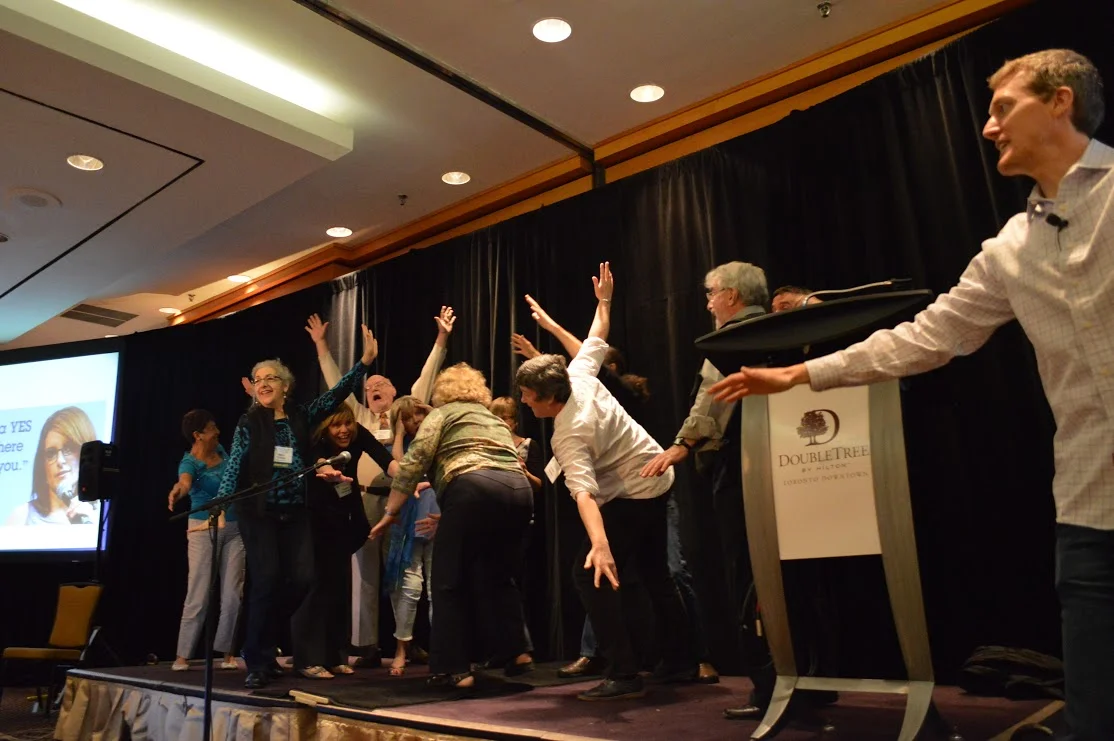
A few simple improv games to get people moving their bodies into a sense of play. Games so easy there’s no fear of “messing it up.” Because even though I mention not needing to be good or funny in the introduction, there might still be some fear of looking silly in front of your peers.


Eg. “Yes Let’s!”

Someone calls out an activity, like “Let’s play basketball!” and everyone practices being open to other people’s ideas by responding with an enthusiastic “Yes! Let’s!” then playing imaginary basketball together.


3) SKILL BUILDING EXERCISES


This is where we explore the meaning of “Yes, and”, and how using it in work interactions makes for better team communication, connection, and collaboration. 


Again, which exercises go here can be determined by the type of team and their goals, whether overall communication skills, listening skills, conflict resolution, presentation skills, creativity, leadership and management skills, and so on.


Eg. “Word at a Time Story”

In smaller groups and/or pairs, each person takes turns adding just one word to the overall story, so nobody has too much control over where the story goes. Trains listening, being open and judging less, being present, letting go of control and thinking collaboratively.


4) PERFORMANCE EXERCISES


This is the section where not everyone is participating at the same time. Some are performing while the rest are their audience. A chance to put your newly honed improv skills into practice. This part is closer to what you might see on Whose Line Is It Anyway?


One small group at a time (unless it’s specifically a presentation skills exercise, then you might be alone for this part) will play an improv game on the “stage area.” The games are designed for success, aka ease of laughs and joy.


Eg. “The Show Must Go On!”

Five participants act out a 1-minute scene improvising a conversation between five different characters. Then we repeat the same scene 4 more times, each time removing one participant, but not their character’s line. Eventually, one participant has to recreate the whole first scene by playing all 5 characters. (If this seems hard, reminder, we do build up to this.)


5) Q&A


Throughout the workshop, I’ll explain how to do each exercise, but also how it applies in the real world. With that said, if there are still any questions, we leave time at the end for discussion.


And then, one last, fun, everyone moving together cool-down exercise.


--


That’s about it. Again, this is just a general outline, and can be adjusted to anything you need. We’re improvisers, after all.


One workshop we did for The Toronto Raptors staff and management, we broke them into 8 different “teams” and did a bracket-style competitive improv tournament, so there’s really no limit to what an improv team building workshop could look like.


But if you like this starting point and want to talk more, reach out.

Improv for Anxiety for Business: What if my staff is terrified of an improv workshop?

A lot of times when I’m working with a company to plan their improv workshop, it’ll be brought up that amidst all the excitement and buzz for the event, there’s also a fair amount of trepidation. Meaning, some of their coworkers/staff have come up to them and said, “Do I have to do the improv?” “Will we have to go on stage?” “What if I’m not funny?” All the fun stuff our brains think about.


So they ask me, do you know how to handle a workshop when some (or most) of the people are terrified and don’t want to be there? And I’ll say, honestly, that’s my specialty!


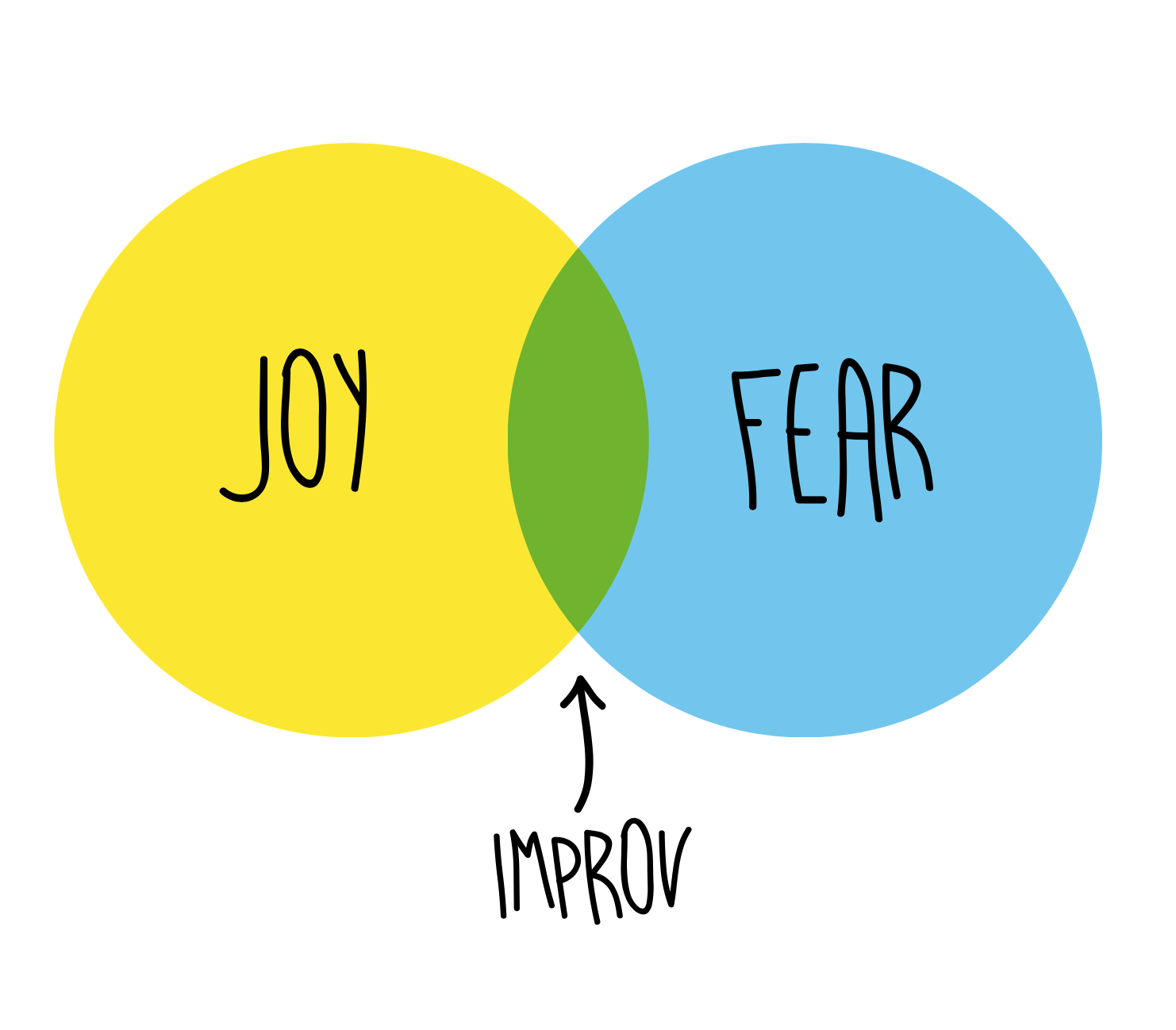
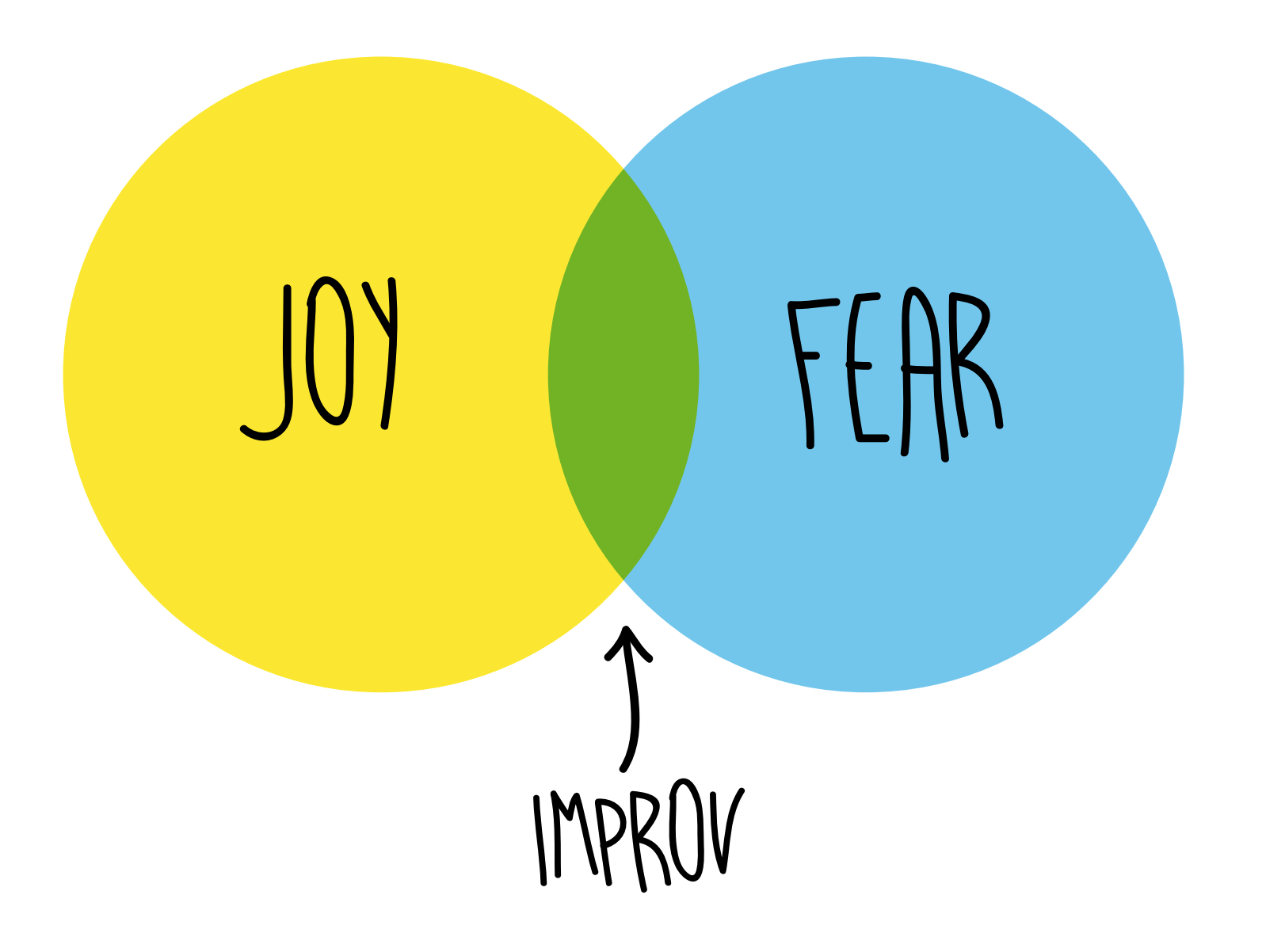
I go into corporate workshops almost the same way I go in to teach an improv for anxiety class. Knowing that there’s a mix excitement and nervous energy. And quickly explain that improv isn’t about being individually funny or showing off, it’s about connection and collaboration, and building ideas together without judgement. In other words, goal #1 is to create a safe space.


For any adult, the idea of “being silly” can be scary. Most of us have been told off for “goofing around” since we were kids. Parents, teaches, managers all telling us to be more serious. Add to that the fact that during the workshop you’re still technically “at work” and depending on who participates, you might be acting goofy in front of your boss(es).


But there’s no reason we can’t do our jobs seriously AND also enjoy them. We can be talking to coworkers about an important project, and yet still enjoy the conversation. Humans instinctively want to play and connect and enjoy life, it’s just been a while since we felt “allowed.”


Improv is as a place where you’re allowed to have fun. And to put everyone at ease, no, I’m not gonna start the workshop with “Whose Line Is It Anyway?” style scenework, where two people have to be funny while everyone else watches. Sure, I could probably find two volunteers willing to do it, but I can tell you the anticipation/dread from the people “waiting their turn” won’t be fun. As much as improv is about stretching comfort zones, it ain’t about breaking them.


Think of improv as a series games and exercises designed to get people playing together like kids used to during recess. Moving around and being silly, connecting with your inner child, your free to be creative side, your state of play.


Because yes, an improv workshop is going to help everyone think faster on their feet, adapt to change, listen and communicate more effectively, feel more confident, and all that good stuff, but one of the main keys is that you’re laughing while learning. So it’s important that they’re having fun. Because it’s easier to play and laugh when you’re not so scared.