

confidence building improv exercises

Why you suck at listening, and how improv can help.

improv team building listening skills

You’re listening wrong. But don’t worry, it’s a pretty simple fix. Right now you’re trying to multitask. Listen to what the other person is saying AND plan your response ahead of time. You can’t. It’s impossible. Just ask science.


A quick google (or Chat, for you kids) of “peer reviewed study multitasking impossible” and you’ll find something along the lines of “The human brain is incapable of completing more than one cognitive task at a time. Instead, it rapidly switches back and forth among competing tasks.” Meaning, you can’t do both.


But don’t worry, that’s good news. Because you don’t need to listen to both. The only thing standing in the way of you being a great listener, is choosing to focus on the person talking to you, over the thoughts in your head.


Now this seem might seem like an obvious choice, but that’s when your fear steps in. The fear that if you don’t plan your response in advance, you’ll blank or say something stupid.


Well here’s even more good news! You don’t need to overcome that fear. Just realize it’s wrong. Planning in your head actually makes it MORE likely that you blank or say something stupid.


Blanking isn’t the result of no thoughts, it happens when there are too many thoughts all at once, and it’s too overwhelming to focus on one. The upside is, if you’re not in your head, but focused on the other person, this is much less likely to happen.


Saying something “stupid” is pretty subjective. There’s no guarantee someone won’t judge what you say even if you do plan. But staying focused on the other person means your response will be directly related to what they just said, instead of the “gist” of what you thought they were saying. And that decreases saying the “wrong thing” and any miscommunications immensely.


In conclusion, staying focused on the other person is all upside. So why don’t we always do it? We’re just out of practice. It’s like meditation, or any mindfulness exercise. Holding attention on one thing is hard. Until it isn’t. Then it feels natural.


An improv workshop will kickstart your listening skills. Improvising is quite literally the practice of thinking on your feet. Get good at that, and you become confident in your ability to respond in real time, so you stop planning your response in your head, dedicate all of your attention to the other person.

Because when you’re building a world with someone out of nothing, where you could be a pirate, or a dragon, or a mailbox, in space, or the jungle, or inside a flower, it’s pretty essential that you pay attention to every single word that’s said.


So next time someone is talking to you, be aware of where your attention is. If you go in your head, shift back out. Stay with them the whole time. They’ll feel seen, and heard, and like it.


Remember: Use the other person’s words as the jumping off point for your response, not the thoughts in your head.


Congrats, you’re a great listener!

How to Measure “Soft Skills” in Improv Training: Increased Confidence

Building Boldness with Improv


Let’s say your goal is to increase your team’s confidence, so you book them for some training. After the training, how do you know they’re now more confident? The obvious answer would be, well, are they acting more confident? So let’s define what that means.

It’s most likely not going to be a complete transformation. Like, if they never used to speak up in meetings at all, I doubt they’ll suddenly present their ideas through interpretive song and dance. Think of behavioural change more in terms of a sliding scale. And you can gauge an increase in confidence by having one simple measurement to compare against: Fear.


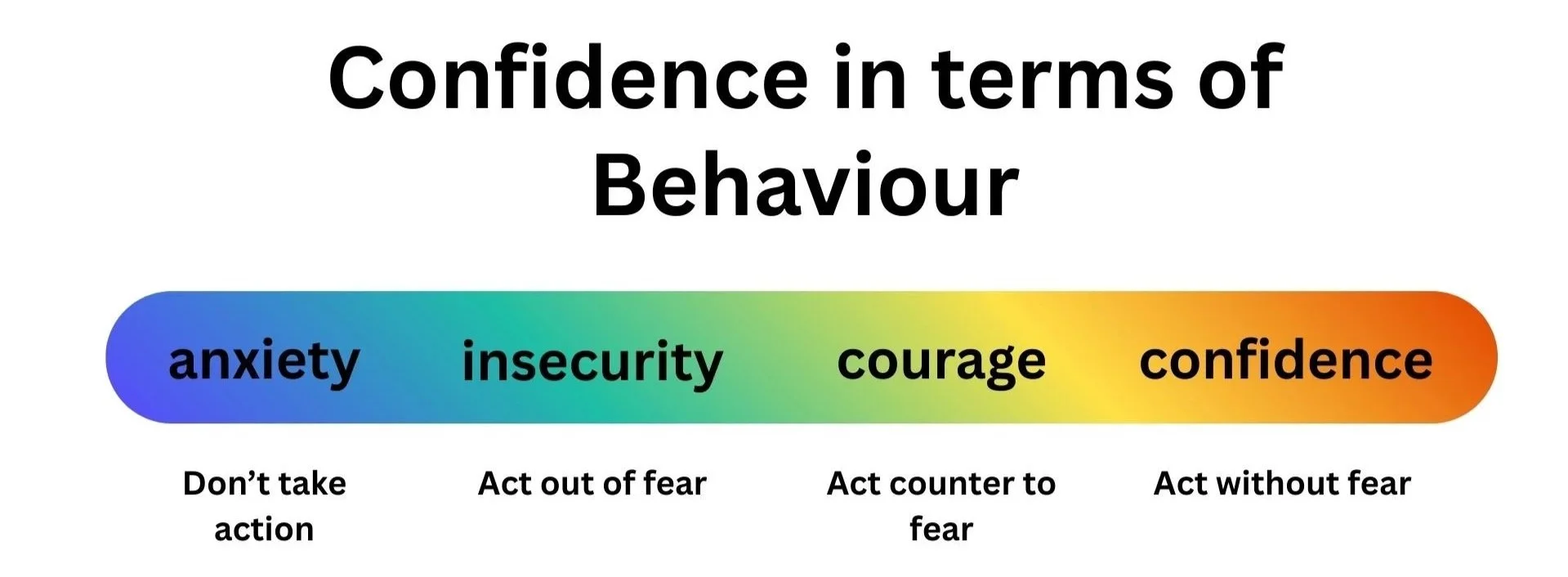
On one end of the scale, you have anxiety (stress, burnout, overwhelm) and on the other end we have confidence (with a couple stops along the way).

improv training confidence success scale

So, to measure the success of the workshop, you need to know where you’re starting from. How scared are they to do things right now, and how much less scared are they to do those things after the workshop? The goal being to slide up the scale.

When it comes to “acting” more confident, here’s an example of how their actions could look along The Confidence Scale™:

improv confidence building training

Again, it’s a sliding scale. Sometimes they might act courageous, but under pressure switch to panic and yell, or shut down completely. No judgement, we all feel it. Improv For Confidence™ workshops are just about sliding a little further on the scale (not judging people for where they are now).

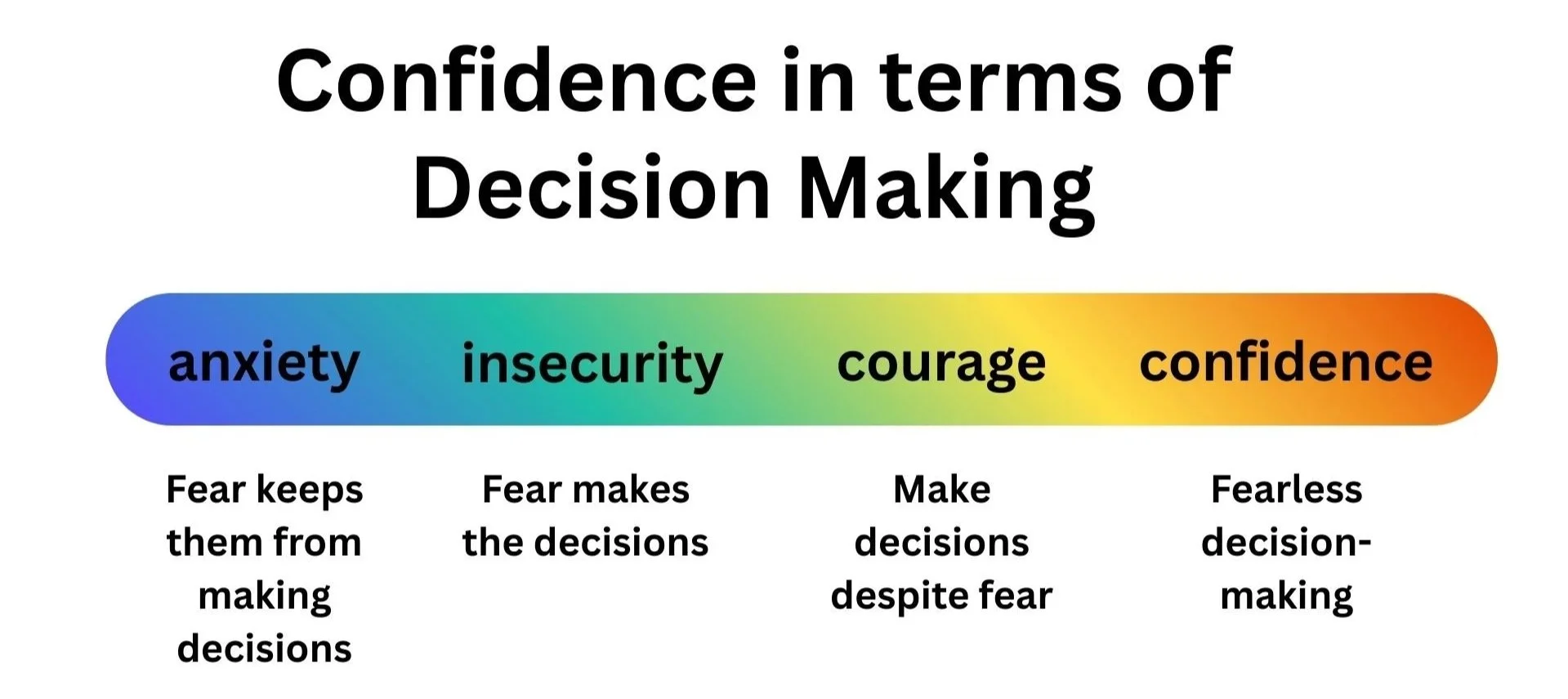
Here’s an example of how to gauge their current confidence when it comes to a key leadership skill:

Unfortunately, many people get stuck at the insecurity stage, and make fear-based decisions (what they think the client would want, what they think would stay within budget, what would be safest, least likely to get them in trouble, etc.) but try to make themselves and others believe they’re confident.


This might not be the most scientific as far as a direct measuring tool, but you can often tell when decisions are made out of fear/insecurity and when they’re courageous/confident. And while fear can help motivate a decision, it’s not always the best one.

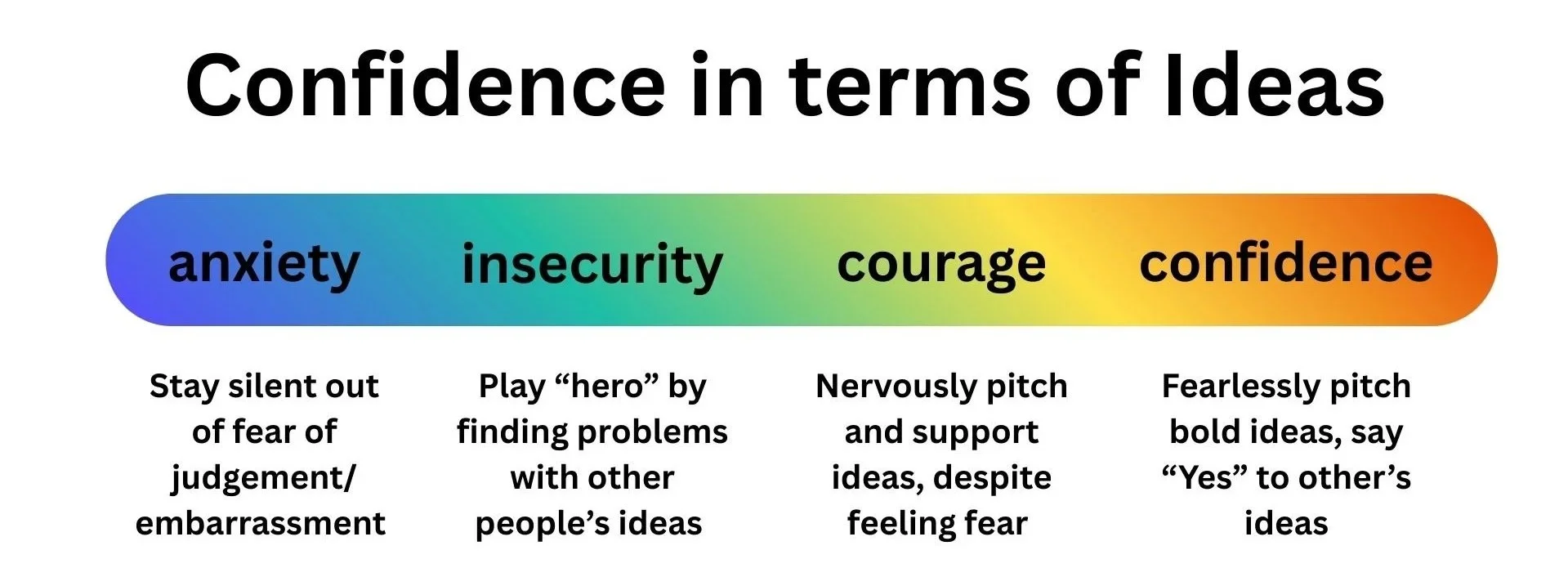
What to look for during the next brainstorming session:

improv confidence team building training creativity

You’ll know there’s an increase in confidence by the amount of “Yeses” versus “No’s.” The voice of reason, devil’s advocate, whatever you want to call it, is in reality, just fear talking. You want people with the courage to explore ideas, not shoot them down before they start.


In short, here’s how you measure success when training the “soft skill” of confidence.

  1. Get a sense of where they are now on The Confidence Scale™.

  2. Do an Improv For Confidence™ workshop (or a few).

  3. Mark where they are after.

Our goal is to move them further along the scale. To change their belief in themselves, so they call the shots more than letting fear lead the way.

Improv will help you build a more confident team. Which, as you already suspect (enough to be looking into confidence training), and will soon see, is definitely a good thing.