Helpful Improv Exercises

Get thrown off when the unexpected happens? Try this improv exercise...

improv exercises coulda said handling the unexpected

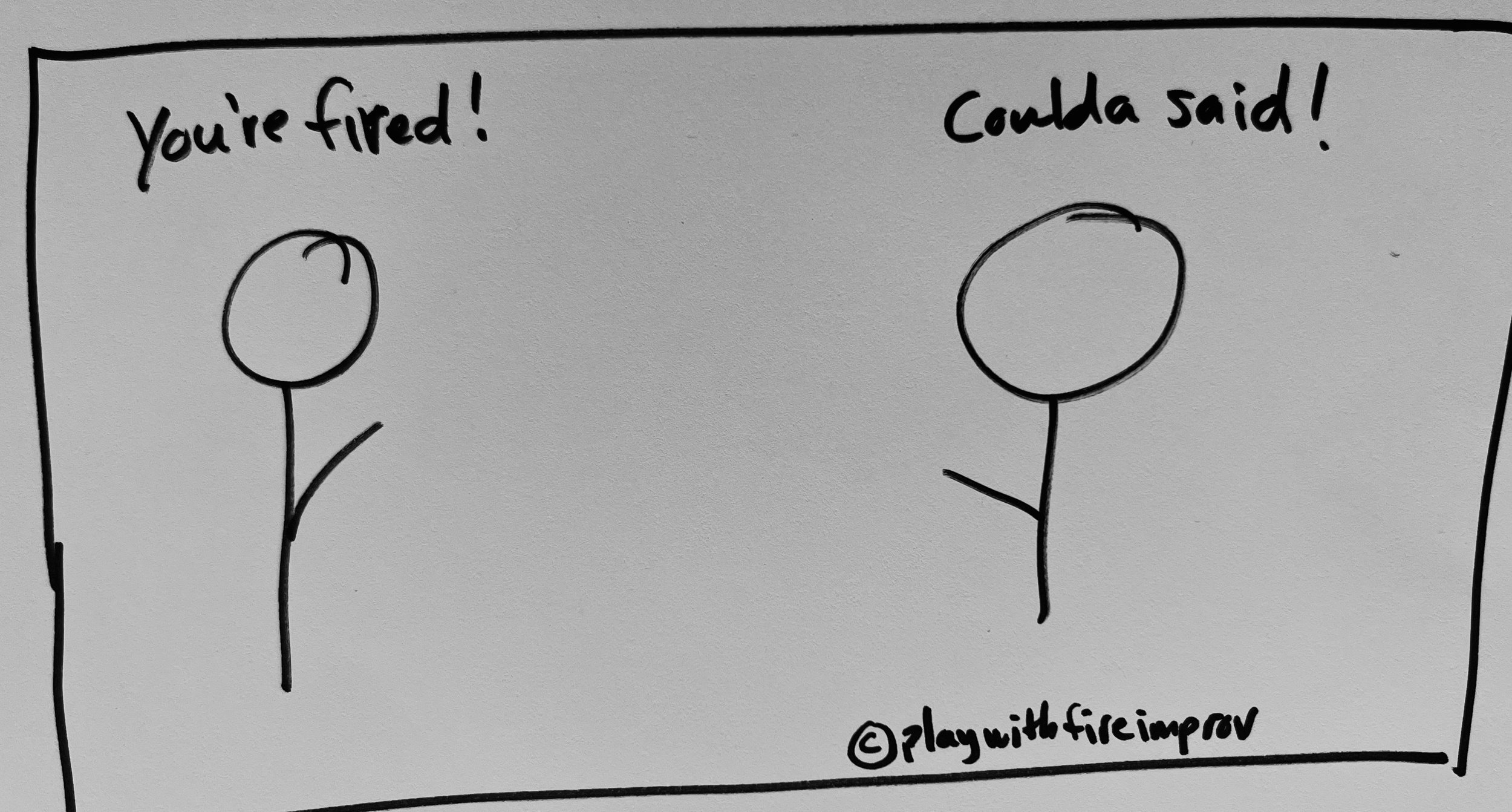
“Coulda said!”

After someone says something, anyone else can say “coulda said!” and the first person has to come up with a new and alternate thing to say.


For example:

Steven: I need those reports by Friday.

Rachel: Coulda said!

Steven: I want those reports by Friday.

Rachel: Coulda said!

Steven: I like your new hat.

Rachel: Awww, thank you!


It’s an opportunity to practice saying things off the cuff. We often get so hung up on building the perfect thing to say in our heads, that when told to say something else, it can throw us off. Good. Make this a gentle and playful part of your culture, so you get to practice failure in a safe space.

Stiff during presentations? Try this improv exercise…

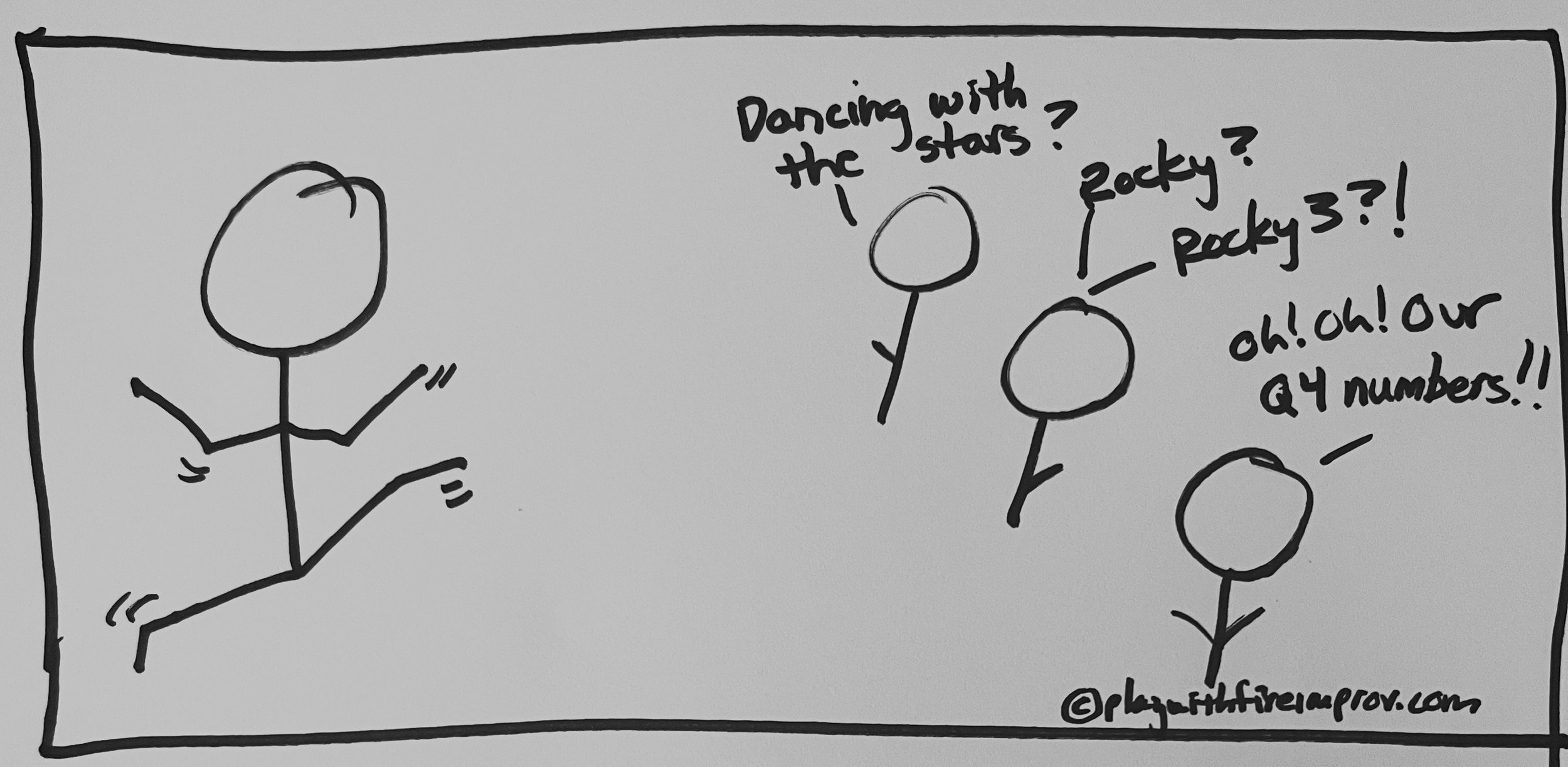
Act it out. Mime. Essentially, play charades.

If you’ve got someone on your team (or it’s you) who feels stiff or flat presenting ideas, have them present one of the ideas on mute.

It forces them to get their body more involved, which will get them out of their heads.

It’ll also bring up their energy.

And they get to celebrate when the audience guesses what’s trying to be said, connecting joy with successful communication.

Once they start talking again, have them carry over some of that movement.

Presenting can be fun!

Having miscommunications? Try this improv exercise...

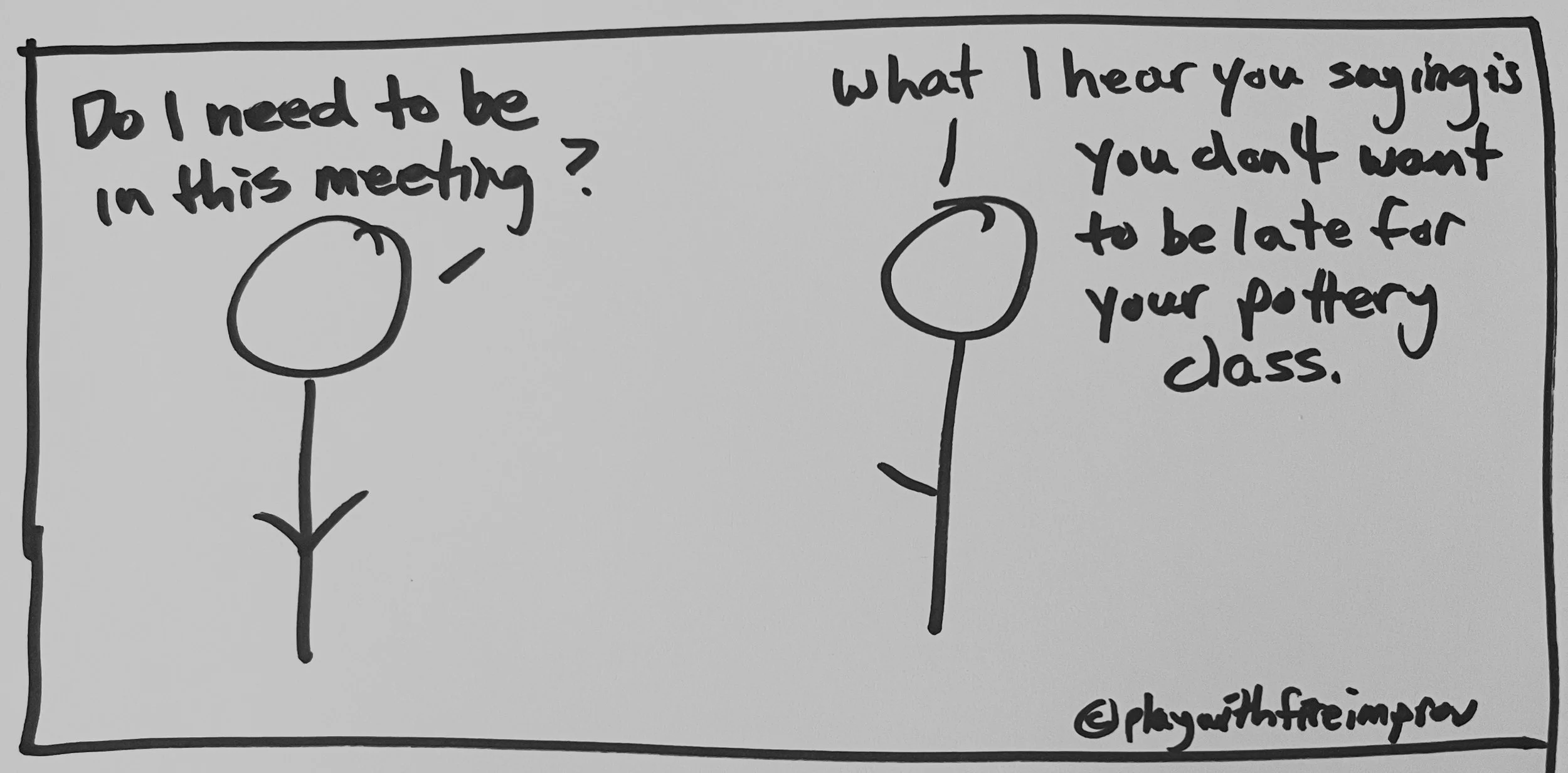
“What I hear you saying is…”

This one has two parts: a literal recap and an emotional one.

Part 1: Literal recap.

Take two people who aren’t on the same page. Have one person say what they’re feeling/thinking about the situation. The other person has to begin their response with a recap, “What I hear you saying is…” and try to repeat exactly, word for word, what was just said.

E.g.

Person 1: “She asked for more time on the project and I said ‘We can’t, we promised the client today.’”

Person 2: “What I hear you saying is… I asked for more time and you said we can’t because we promised the client they’d see the work today” (doesn’t need to be exactly the same words) and then they add their response. The other person repeats exactly, then adds their response. This makes sure we’re being heard.


Part 2: Interpretation.

Same exercise, but not as literal. They resond, “What I hear you saying is…” (inflection on the “I”) and say how their brain is interpreting those words.

E.g.

Person 1: “She asked for more time on the project and I said ‘We can’t, we promised the client today.’”

Person 2: “What I hear you saying is… (emphasis on the “I”) asking for more time would make you look bad in front of the client and you’d rather I suffered than you did.”

Then the other person repeats, then gives their interpretation. It might get heated, but it’ll go deeper into what’s really going on instead of just the endless loop of surface arguments.

Give it a try and let us know how it goes!

Conflict between team members? Try this exercise...

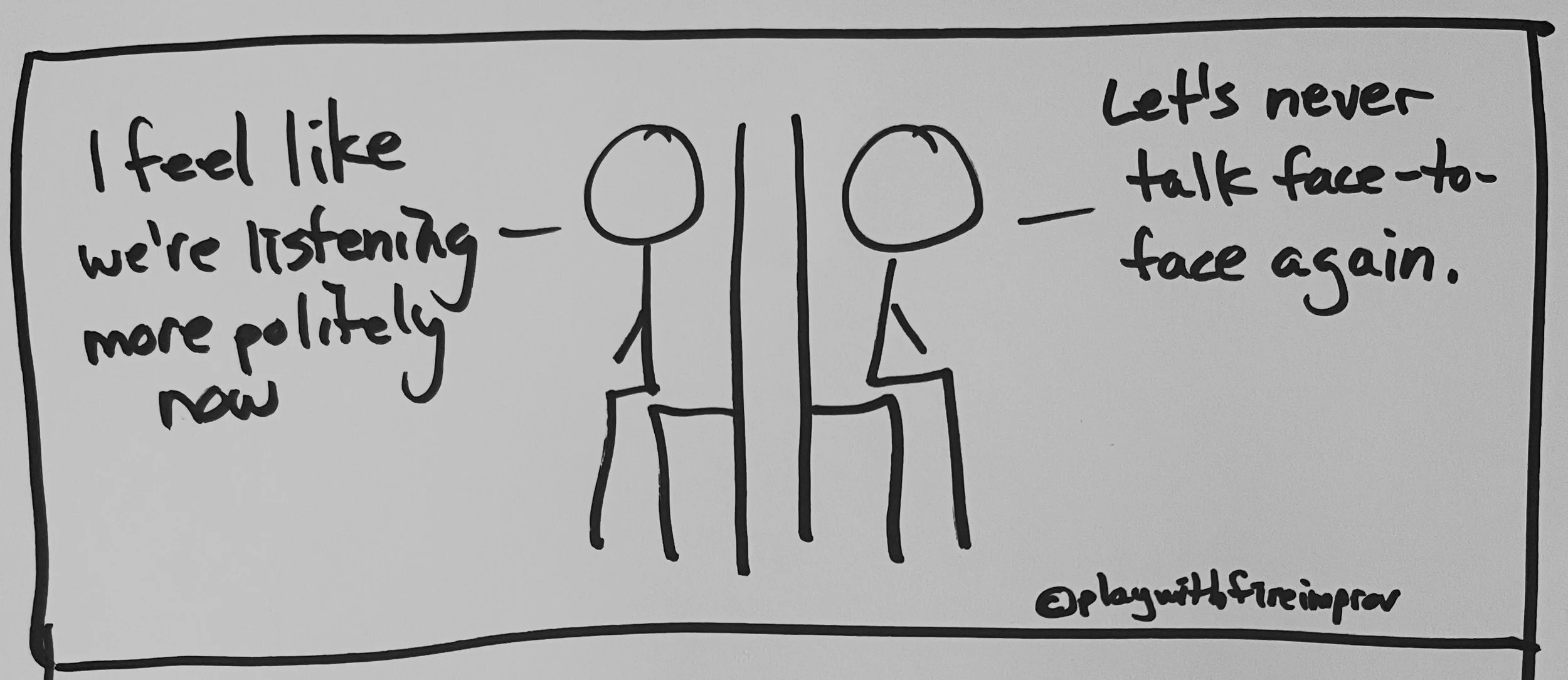
Have them sit back to back. That’s it.


Depending on how heated the conflict is, sometimes even seeing each other can trigger tension. So remove it. Take away the judgmental eyes, the facial expressions, all of the body language (middle finger?).


If you’re gonna have them talk it out, simplify the communication down to just the words.

—

What’s a work issue you’re having? Let us know, and we’ll find or create an improv exercise to help.