Leadership Skills

Improv for Confidence: The Blog

Exercises, tips, and stories to boost confidence, collaboration, and communication in the workplace.


Improv is weird and silly and unpredictable, so you get to practice being thrown off and messing up, so you can practice thinking on your feet and recovering with aplomb. And the best part is, you don’t have to do it alone.

You can’t help but feel more confident going into a situation knowing that you’re part of a team, and you can handle things not going exactly as planned.

Browse the categories below to learn how to fear less, and confidence more:


26 Ways Improv Can Help Your Business In 2026

What are you going to do this year to help your team? You could book a team building workshop, an active listening workshop, a presentation skills workshop—or just cover all the skills in one go, with improv!


Improv helps with Listening & Communication Skills

 1) Improves listening skills through the practice of staying present and focused

2) Hones non-verbal communication, reading body language, energy and tone

3) Develops openness to different ways of thinking

4) Enables thinking on your feet


Improv helps with Collaboration & Team-building

5) Promotes building ideas together through “Yes, and”

6) Encourages the support of the ideas of others

7) Bonds the team over stories and laughter

8) Builds trust among team members and other departments


Improv helps with Creativity & Innovation

9) Breaks rigid thought patterns with outside the box thinking

10) Lessens fear of making mistakes to open up to creative problem solving

11) Opens the mind to many different perspectives and points of view

12) Shifts the mindset to see ideas in terms of potential vs pitfalls


Improv helps with Confidence

13) Forms the ability to handle change and uncertainty without panic

14) Keeps the fear of failure and the judgement of others from holding them back

15) Builds trust in themselves and the team

16) Increases the willingness to take calculated risks


Improv helps with Leadership & Management

17) Harnesses the ability to stay calm under pressure, respond vs react

18) Cultivates the ability to make decisions on the spot

19) Promotes inclusive leadership, focusing on delegation and empowerment

20) Focuses on emotional intelligence with authenticity and empathy


Improv helps with Culture

21) Creates a safe, supportive environment with “Yes and”

22) Fosters a sense of shared ownership of outcomes (we’re in it together)

23) Reduces miscommunications, misunderstandings through clear communication

24) Aids in conflict resolution, objection handling and negotiation flexibility


Improv helps you find Joy in what you do

25) Improv is fun, which improves morale and engagement

26) Improv helps you play!

If any of that sounds good, reach out to book an improv workshop!

26 Ways Improv Can Help You In 2026

improv new year's resolutions 2026

Improv helps with everything!

Did you write a list of New Year’s Resolutions with the plan to do a bunch of different tasks to achieve those goals? Simplify, man! Just do improv!

Improv helps you…

1) Laugh more.

2) Play characters that don’t have your problems.

3) Get out of your head.

4) Be silly and be okay being silly.

5) Practice failing and recovering.

6) Use your imagination to create wonderful things.

7) Tell fascinating stories.

8) Move your body in interesting ways.

9) Think differently and be okay with others thinking differently.

10) Adapt to the unexpected.

11) Let go of expectations.  

12) Surprise yourself! (Improv gets you doing things you had no idea you could do.)

13) Be open to the ideas of others.

14) Love and support the ideas of others.  

15) Connect with people on a deeper level.

16) Judge less. Yourself and others.

17) Accept things as they are. It’s not settling, just not denying.  

18) Take yourself and any “failings” as little less seriously.

19) Trust yourself more. You can do this.  

20) Feel more confident.

21) Make bold choices. (Or make any decision, then boldly follow through.)

22) Make new friends.

23) Know that you are enough.

24) Release stress from your body and mind.

25) Focus on all the little moments of joy.

26) Play!

If you like the sounds of that, reach out to book an improv workshop today!

How to Measure “Soft Skills” in Improv Training: Increased Confidence

Building Boldness with Improv


Let’s say your goal is to increase your team’s confidence, so you book them for some training. After the training, how do you know they’re now more confident? The obvious answer would be, well, are they acting more confident? So let’s define what that means.

It’s most likely not going to be a complete transformation. Like, if they never used to speak up in meetings at all, I doubt they’ll suddenly present their ideas through interpretive song and dance. Think of behavioural change more in terms of a sliding scale. And you can gauge an increase in confidence by having one simple measurement to compare against: Fear.


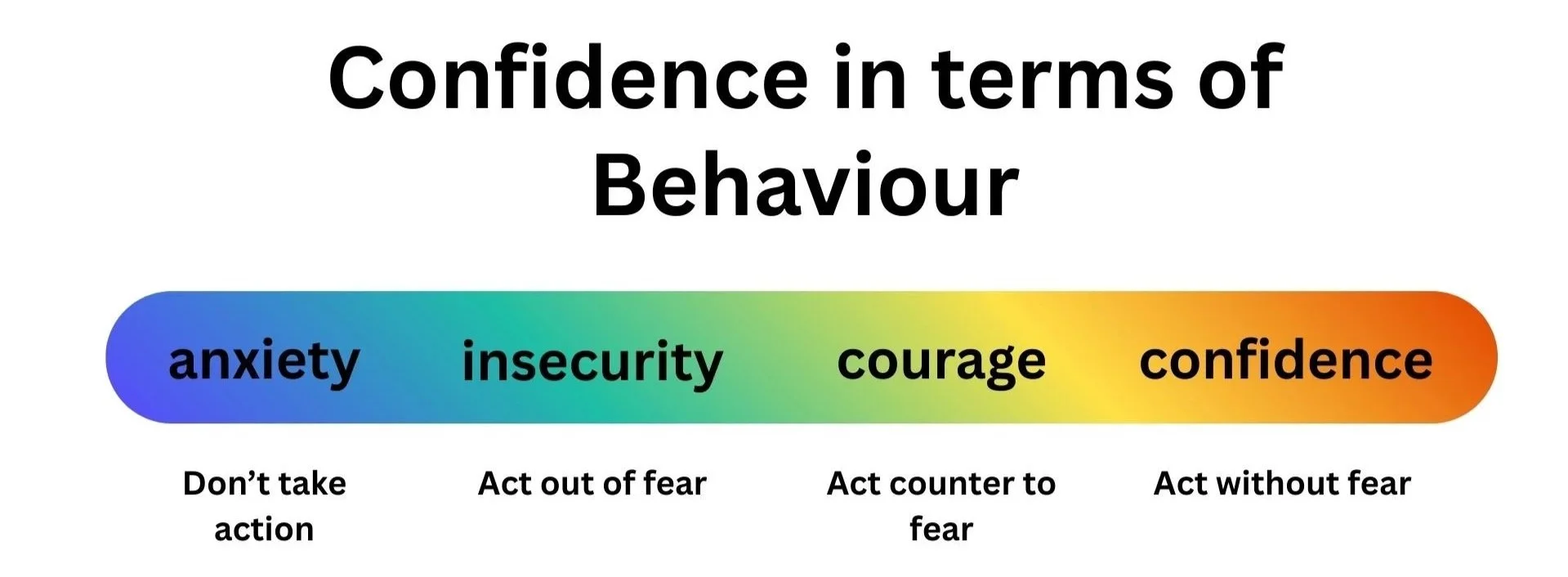
On one end of the scale, you have anxiety (stress, burnout, overwhelm) and on the other end we have confidence (with a couple stops along the way).

improv training confidence success scale

So, to measure the success of the workshop, you need to know where you’re starting from. How scared are they to do things right now, and how much less scared are they to do those things after the workshop? The goal being to slide up the scale.

When it comes to “acting” more confident, here’s an example of how their actions could look along The Confidence Scale™:

improv confidence building training

Again, it’s a sliding scale. Sometimes they might act courageous, but under pressure switch to panic and yell, or shut down completely. No judgement, we all feel it. Improv For Confidence™ workshops are just about sliding a little further on the scale (not judging people for where they are now).

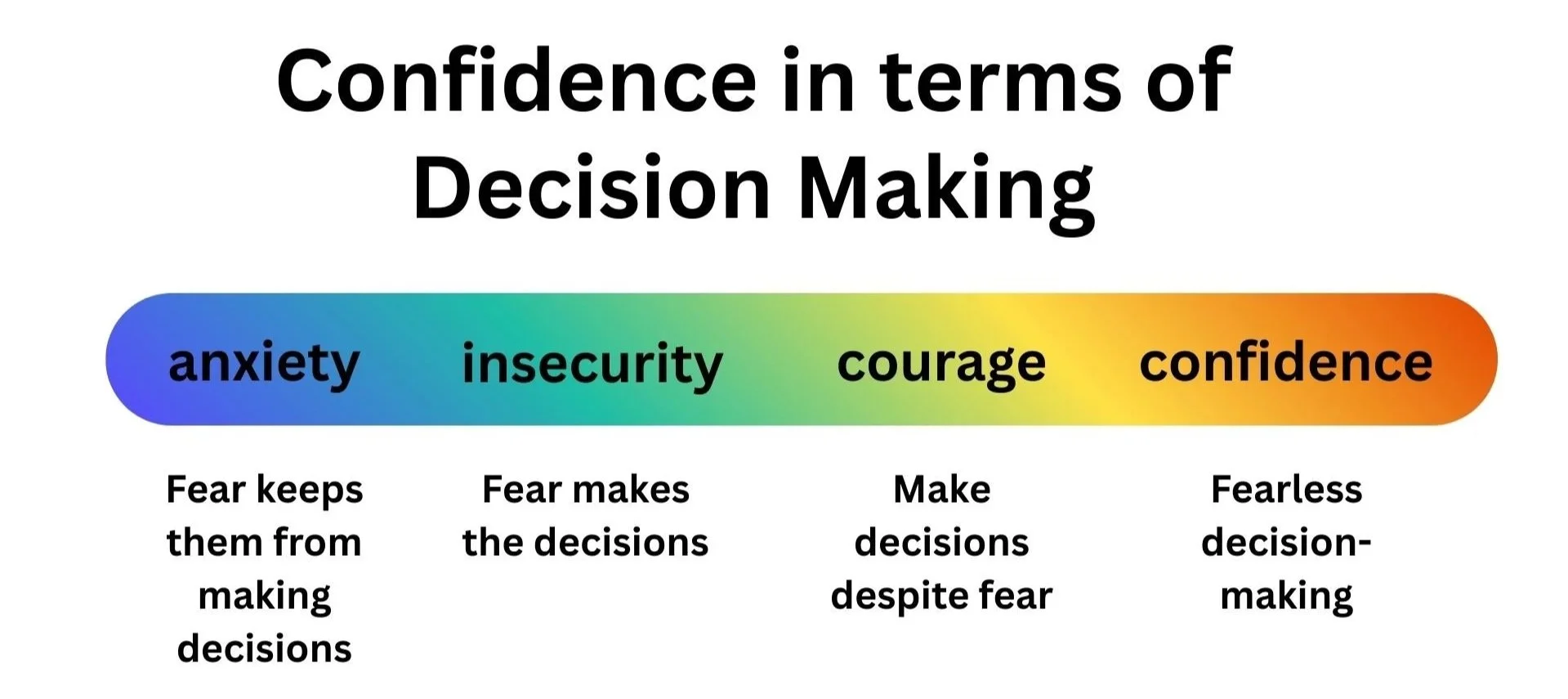
Here’s an example of how to gauge their current confidence when it comes to a key leadership skill:

Unfortunately, many people get stuck at the insecurity stage, and make fear-based decisions (what they think the client would want, what they think would stay within budget, what would be safest, least likely to get them in trouble, etc.) but try to make themselves and others believe they’re confident.


This might not be the most scientific as far as a direct measuring tool, but you can often tell when decisions are made out of fear/insecurity and when they’re courageous/confident. And while fear can help motivate a decision, it’s not always the best one.

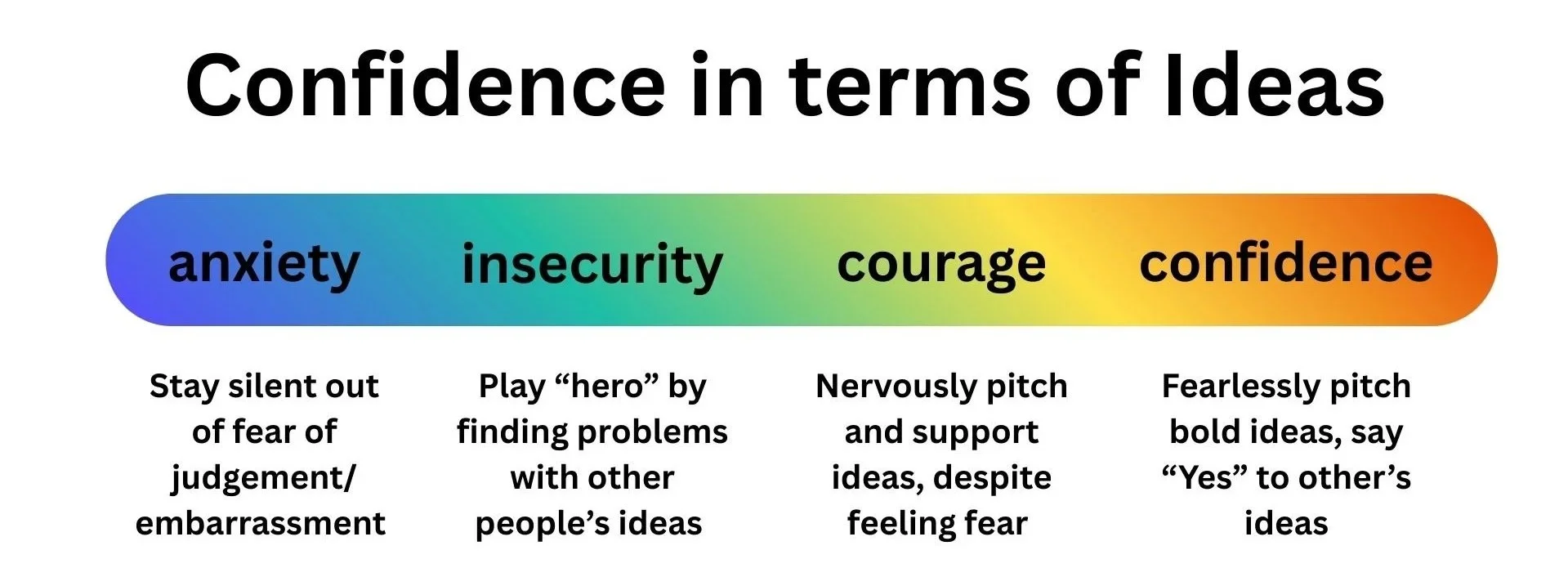
What to look for during the next brainstorming session:

improv confidence team building training creativity

You’ll know there’s an increase in confidence by the amount of “Yeses” versus “No’s.” The voice of reason, devil’s advocate, whatever you want to call it, is in reality, just fear talking. You want people with the courage to explore ideas, not shoot them down before they start.


In short, here’s how you measure success when training the “soft skill” of confidence.

  1. Get a sense of where they are now on The Confidence Scale™.

  2. Do an Improv For Confidence™ workshop (or a few).

  3. Mark where they are after.

Our goal is to move them further along the scale. To change their belief in themselves, so they call the shots more than letting fear lead the way.

Improv will help you build a more confident team. Which, as you already suspect (enough to be looking into confidence training), and will soon see, is definitely a good thing.

How Fortune 500 companies use improv to build their leadership skills.

PART 2: Improv helps you care about others.

improv leadership skills team building activities toronto

In Part 1, we talked about the importance of the ability to make decisions. Now we’re talking about which decisions to make. And ideally, they’re decisions that will help the team you’re leading.


Imagine you’re on stage with someone. And they start the scene by saying, “Well, I hope you’re happy now.” In Part 1 we talked about all the decisions that need to be made to help build the world out of imagination. What did you do? Who would ask you that? What’s the context? Etc. All decisions you could make by going in your head and rummaging around for answers.


Now let’s shift outside ourselves and focus on them. How did they say it? Annoyed? Angry? Almost laughing? How are they looking at you? How close/far are they standing? What do they want from you? Like is it funnier TO THEM if you say that you are happy now?


In other words, improv teaches you to care about your scene partner(s). In real life, you can think of your “scene partner” as anyone you’re having an interaction with. Be present with them. What are they feeling? What do they want out of this conversation?


Humans tend to think other people think like they do. And often get frustrated when they don’t. But with improv, you quickly learn to be open to different ways of thinking, and even more important, appreciate different ways of thinking. So in a leadership position, you learn it isn’t about teaching your staff to be more like you, or that you’re the only one who knows how to do it “right,” but appreciating people for who they are, and what they can bring to the table.


In other words, you learn to let go. Leading isn’t about control. At first, out of fear, people often try to steer conversations/situations to where they want it to go, or to where they think it should go. But it’s hard to control others, and make them say or do everything you want. It’s frustrating. So with improv, you give up control, and the next thing you know, you’re sharing an experience where the collective ideas are way better than your individual ones would’ve been.


In conclusion, if you want to care more about others, a key leadership skill, you should definitely try improv.

How Fortune 500 companies use improv to build their leadership skills.

PART 1: Improv makes you a better decision maker.

improv team building leadership skills activities toronto

Imagine all hell is breaking loose. Someone yells out, “All hell is breaking loose, what should we do?!” You hear a series of panicked “I don’t know, I don’t know!” then, breaking through the cacophony, you say, “We could try [anything really]” All heads are going to turn to you. Because you’re now the leader.


Leaders are the people who make decisions, and in turn, others look to to make those decisions. Especially under pressure.


So if you’re in management, or want to be, and you want to hone your decision making skills in moments of pressure, improv can help. Because improv is essentially just a series of decisions.


Imagine you walk out onto an empty stage with another person. You need to build a world out of imagination and show it to the audience. Where are you? Who are you? What are you doing? All decisions that need to be made pretty quickly. How do we know each other, how do we feel about each other, how many wings does a squirrel dragon have…? In improv, there are infinite options, so you’ve gotta choose wisely. And by wisely, I mean, just make a choice!  


Let’s say the scene starts with the other character saying to you, “Is that a new cape?”

You have a couple seconds to shake off the fact that you’re not actually wearing a cape in real life and accept the new reality being proposed, then decide some of the following:

  • Why are you wearing a new cape? Is it to impress the other character? Job interview? Laundry day?

  • Are you a superhero, or just fashionable?

  • Is it new as in brand new, or just new to their character seeing you in it?

  • Did you buy it, or make it, or a combination of both?

  • What’s the difference from your old cape if you had to describe it?

  • Who would ask you that? How do you know each other?

  • Did they sound curious? Impressed? Disappointed?

  • How much does them liking it matter to you?

There might be moments where you might think, “I don’t know.” But you do know, because you’re the one creating the world. Just like in life, you just make a choice, then make it work.

In conclusion, if you want to practice decision making, a key leadership skill, yeah, you should definitely try improv.


PART 2: Improv helps you care about others.

Top 3 Reasons your Staff hates Team Building Activities

improv team building activities toronto

#1: They don’t want to look stupid.

Most team building exercises are designed to be fun. Which sounds great to the person booking, and potentially terrifying to the people expected to have this so called “fun.” Fun sounds silly, and they don’t want to look silly. It’s embarrassing to act like a kid when you’re not a kid (especially in front of coworkers).

You see, adults not only forget how to have fun, they’ve been trained that fun is bad. Having fun means you’re not working. And you’re supposed to be working! So even if the boss says it’s okay to play, it takes time to get people feeling safe enough to be silly.

Mainly because, they don’t want to fail. That’s the real “What if I look stupid?” “What if I try something new and I’m not good at it and I fail and everyone thinks I suck?” Most people are terrified of failure. Which is why a lot of team building events are built around alcoholic drinks.

Solution: Avoiding silly, while it seems like what they want, isn’t going to help anyone grow. I’m proposing we go completely the other way. Stretch their comfort zones by going super silly, with potential to fail, but in a way that they fail together, and feel safe from judgement. That’s the key. And that’s the “Yes and!” of improv!


#2: They’re busy.

If it’s during the day, they’re busy with work. They might like the idea of fun, but if the deadlines stay the same, that “fun” is just gonna feel like another thing crammed into their already busy schedule.

If it’s during the evening, they’re busy with life. They’ve families, and friends, chores, health issues, and a whole world outside of work that let’s be honest, probably still requires them to work.

Solution: Keep it short and sweet. Have the event come to you. No prep needed. Just walk down the hall, join the improv workshop, have fun for an hour, then back to work feeling refreshed. And better for it. Because one thing that can help them overcome Reason #1 and #2 is that the activity will help them. Which brings us to…


#3: They don’t see the value in it.

People want to clearly understand what the activity is, and what they’re going to get out of it. How is this going to help me grow at my job or life? Basically, will doing this and learning this skill help me get better… and therefore make more money?

Or, if they’re not motivated by money (rare, but they exist), will this help make my life easier? Will I feel more at ease working with others? Will this make new ideas come more effortlessly?

If you’re going to get your staff to look past Reasons #1 and #2, then the activity has gotta be something they know for sure will benefit them.


Solution: As always, improv. Most people understand that being good at improvising helps with every interaction you have in life. The ability to adapt to change without panic. To think on your feet. Get good at small talk, better at presenting, thinking more creatively, improv makes you better at everything!


In conclusion, your staff might hate the idea of a team building activity, and we understand that. But it all melts away when, within minutes, they’re all laughing and having fun together without judgement, stretching their comfort zones and learning new skills.

Click here to book your team a workshop they’ll love!